
This guide is for learners in England who want to understand how people move into engineering fitting, including school leavers, apprentices, adult learners and career changers.
Engineering fitting is a practical role built around assembling, fitting, adjusting, maintaining or repairing engineering components and equipment. The exact work can change depending on the employer, sector, setting and fitting bias, so one fitter’s day-to-day role may not look exactly like another’s.
For someone starting out, the route is usually less about one short course and more about gradually proving capability. That means learning the tools, understanding drawings or instructions, working safely, repeating tasks, checking the quality of the work, and building evidence that you can meet the required standard.
This page explains the broad engineering fitter route in England and stays focused on the general learner pathway, rather than drifting into separate specialist job titles.
What is an engineering fitter?
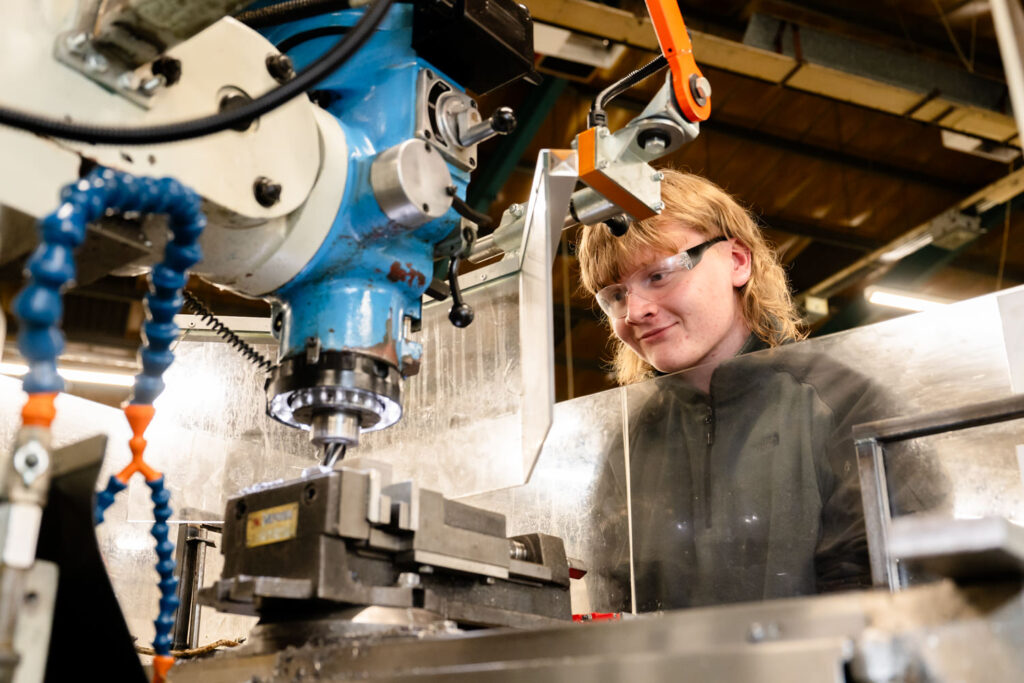
An engineering fitter works on components, assemblies, machines or systems that have to be fitted, assembled, adjusted, refurbished or checked so they meet a specification. The title covers a broad area of work. Depending on the role, the fitting may have a mechanical, electrical, electronic, control-systems, instrumentation or pipe-fitting bias.
Engineering fitters help turn drawings, specifications and separate parts into finished equipment or assemblies that are safe, accurate and ready for use. In the current apprenticeship standard, examples of the equipment involved include turbines, cranes, gearboxes, production lines, rigs and platforms.
The work matters because the parts being fitted are often used in real industrial settings where poor alignment, weak assembly, incorrect settings or missed checks can cause faults, downtime or safety problems. That is why engineering fitting is quality-sensitive work and often safety-critical.
What does an engineering fitter do?
Engineering fitting is wider than simply bolting parts together. The role usually includes planning, preparation, assembly work, checking, adjustment and handover.
Common day-to-day tasks include:
- Reading drawings, specifications, job sheets or work instructions
- Planning the task and checking the right tools, equipment and materials are available
- Preparing the work area and the components or assemblies
- Fitting, assembling, adjusting, refurbishing or replacing parts
- Using hand tools, measuring equipment, power tools or other relevant systems
- Checking the finished work against tolerances, standards or quality requirements
- Making adjustments where something is out
- Recording the work or handing over the finished assembly
- Following health, safety, environmental and quality procedures
On some jobs, that also means working with bills of materials, inspection records, assembly instructions or electrical, pneumatic and hydraulic circuit diagrams. It can also mean checking things such as torque settings, tolerances, threads, voltages or calibration points before the work is signed off.
Table of Contents

What industries can an engineering fitter work in?
Engineering fitter jobs turn up wherever equipment, systems or assemblies need to be built, refurbished, installed, checked or handed over to a required standard.
At a broad level, that includes:
- Manufacturing
- Process industries
- Engineering and maintenance environments
- Production and assembly settings
- Utilities and infrastructure where industrial equipment is used
- Transport or industrial systems where machinery and assemblies need fitting work
Common settings and employer types include:
- Workshops
- Factories
- Assembly environments
- Client premises
- Industrial sites
- Maintenance environments
This breadth is one reason the title covers more than one kind of fitter. A learner might enter through a broad engineering fitter apprenticeship and then spend most of their time around one type of system, one sector or one fitting bias.
How do I become an engineering fitter in England? Training routes explained

There is more than one route into engineering fitting in England. Those routes do not all produce the same kind of qualification, the same depth of practical experience or the same level of recognised competence, so it helps to be clear about what each one is likely to give you.
A learner will usually come in through one of these routes:
- An apprenticeship
- A college course
- A specialist training-provider course
- Direct application from related experience
- An NVQ or another work-based qualification route
The sections below explain what those routes usually look like in practice.
Which engineering fitter route might suit me best?
- Apprenticeship: Best if you want paid work, structured training and a clear route into industry.
- College Course: Best if you want to build engineering basics before applying for junior roles or apprenticeships.
- Specialist Training Provider: Best if you want shorter, focused practical training.
- Applying Directly: Best suited to people who already have relevant engineering, maintenance, fitting or transferable technical experience.
- NVQ / Work-Based Qualification: Best if you are already employed in a role that includes fitting-related work and want recognised evidence of competence.
The most suitable route depends on age, location, budget, previous experience and whether you want to move into paid work straight away or build knowledge and workshop confidence first.
Pathway one: Engineering fitter apprenticeships in England

For many learners, the clearest route in is an apprenticeship. In England, an apprenticeship is a job with training built into it. To start an apprenticeship, you must be 16 or over, living in England, and not in full-time education.
The current engineering fitter apprenticeship standard is level 3. The published standard lists a typical duration of 42 months to gateway. The current assessment plan also sets a minimum of 20% off-the-job training during the on-programme phase.
In practical terms, the apprenticeship route usually means:
- You work and get paid
- You have paid time for training or study
- You get employee rights such as paid holidays and sick pay
- Training can happen at work, at a college or training provider, or online depending on the programme
- The daily work can look different from one employer to another
You can search live vacancies through Find an Apprenticeship. You can also check training providers delivering the engineering fitter standard through the apprenticeship training course directory.
What is EPA and what is gateway?
- EPA means end-point assessment. It is the final assessment stage of the apprenticeship. For engineering fitter, the current plan uses three assessment methods: a project report with questioning, a multiple choice test and a professional discussion supported by a portfolio of evidence.
- Gateway is the point just before EPA starts. For engineering fitter, gateway means the apprentice has completed the required on-programme learning, the employer is satisfied they are working at or above the occupational standard, and the gateway evidence has been met. The published plan sets the EPA period at typically four months after gateway.
Pathway two: College engineering fitter qualifications

A college route usually means taking an engineering-related course first, then using that as a stepping stone into an apprenticeship, trainee post or junior engineering role.
For a related fitter route, the common subject areas include:
- Engineering
- Mechanical engineering
- Electrical engineering
- Fabrication and welding
- T Level in maintenance, installation and repair for engineering and manufacturing
The T Level route is a level 3, 2-year course and includes a minimum 9-week industry placement. The entry requirements are set by the individual school or college rather than by one national engineering fitter rule.
You can use the National Careers Service course search to look for classroom or online study near you.
Pathway three: specialist engineering fitter / mechanical fitting courses with a training provider
This route usually suits adults retraining, learners who want a practical introduction before committing to a longer programme, or people who need a structured start with tools, safe working and workshop routines.
Formats vary a lot. Some courses are short and skills-focused. Some include a recognised qualification. Some are mainly there to build familiarity, confidence and supervised practice.
A focused course can help with foundation skills, workshop familiarity, tool use, measuring, preparation work and basic assembly tasks. What it does not automatically give you is the same level of workplace evidence or occupational competence you would usually build through an apprenticeship or a work-based route.
When comparing training-provider options, check exactly what you leave with at the end. That might be a recognised qualification, a provider certificate, or evidence of attendance and practical training rather than a full occupational outcome.
Pathway four: applying directly

Direct entry is possible, but it is usually more realistic if you already have a related background, existing practical skills or employer-recognised evidence.
For a related fitter role, the most relevant backgrounds listed publicly are:
- Mechanical engineering
- Pipefitting
- Welding
- Electrical engineering
There is also a more gradual version of direct entry. Some people start as an engineering operative or trainee craftsperson and build their way towards fitter responsibilities on the job.
Employers are usually looking for evidence that you can work safely, follow instructions, use tools correctly, check your work, and stay consistent under normal job conditions. Depending on the site or sector, extra requirements may apply as well. For many related maintenance jobs, an industry safety certificate such as the CCNSG Safety Passport Scheme can be needed.
Pathway five: NVQ – work-based qualification

A work-based qualification route is most relevant if fitting work is already part of your job. Instead of relying mainly on classroom tasks, you build evidence through the work you actually do.
That evidence can include observations, job records, completed tasks, portfolio material and assessor feedback. Delivery may happen in the workplace, through a training provider, or through a mix of both.
This is not the same thing as a short introductory course. A short course may help you learn tools, processes and workshop habits. A work-based qualification route is about showing that you can meet the required standard while doing real work.
Exact qualification titles can vary across engineering, maintenance and manufacturing routes, so it is worth checking the current title, level and assessment method before enrolling. Some jobs may still need extra site approvals, safety cards or employer sign-off on top of the qualification route itself.
Becoming an engineering fitter with Elevated Knowledge
Elevated offers an engineering apprenticeship Level 3 Engineering fitter course in Stockport over the duration of 42 months.
- Level: Level 3
- Duration: 42 months
- Delivery: In person
- Location: Stockport
- Occupational profile: manufacturing and process sectors; producing complex high-value, low-volume components or assemblies to the required specification
- Typical job titles: controls and systems fitter, electrical fitter, electronic fitter, instrumentation fitter, mechanical fitter, pipe fitter
- English and maths : apprentices without Level 2 English and maths need to achieve this before EPA, with the exceptions stated on the page
- Professional recognition: IET for Eng Tech
- Qualification options: EAL, Pearson and City & Guilds knowledge-based options
Read the Elevated Engineering fitter apprenticeship page and apprenticeship page for more details.
Why become an engineering fitter?
This is a practical route for people who like hands-on engineering work, accurate measurement, drawings, tools, assemblies and problem-solving. It can also suit people who want a structured paid route into industry through an apprenticeship rather than a classroom-only route.
The main planning questions are usually these:
- What might I earn? Current figures from the National Careers Service for maintenance fitter show £24,000 as a starter to £38,000 for an experienced engineering fitter. Treat that as guidance, not a guaranteed engineering fitter salary.
- How long does it take? The current Engineering Fitter apprenticeship standard has a typical duration of 42 months, excluding the assessment period.
- What are the working hours? The typical hours for a maintenance fitter are around 42 to 44 hours per week.
- What are the working conditions? Fitters may work in workshops or on client premises, including hazardous environments.
Becoming competent is not a shortcut route. It takes time, practice and evidence.
What happens after I’ve become a qualified engineering fitter?
Initial qualification is not the end point. Progress usually comes from taking on more difficult work, building a track record for quality and reliability, and gaining experience with different systems, sectors or environments.
Common progression patterns include:
- More complex fitting, assembly or refurbishment work
- Maintenance-heavy roles
- Engineering technician roles
- Site supervisor responsibilities
- Sector or system specialisation
For a related fitter routes, many learners may progress to engineering technician or site supervisor roles, or specialise in sectors such as marine engineering, heavy vehicle repair, manufacturing or power generation.
What you’ll learn (learning outcomes)
The route you choose will affect the detail, but the common thread is repeatable competence. Learners have to build enough understanding and practical control to complete fitting work to the required standard, not just once, but consistently.
Typical learning areas include:
- Working safely and preparing the work area
- Reading drawings, specifications, job information and assembly instructions
- Selecting and checking tools, equipment and resources
- Handling components and assemblies correctly
- Carrying out fitting, assembly, adjustment or refurbishment tasks
- Measuring, checking and making corrections
- Understanding quality checks, tolerances and handover requirements
- Completing documentation and following health, safety, environmental and quality rules
On the technical side, the published standard also covers areas such as materials, measuring, marking out, cutting, drilling, engineering data, component documentation, and interpreting information such as electrical readings, vibration, speed and calibration.
Pay and progression as an engineering fitter

This section separates two topics that often get mixed together:
- Apprentice pay rules
- Typical pay for qualified engineering fitters
Apprentice pay rules in England
Current GOV.UK minimum wage guidance says that from April 2026 the apprentice rate is £8.00 per hour. Apprentices qualify for that rate if they are either under 19, or aged 19 or over and in the first year of their apprenticeship.
If an apprentice is aged 19 or over and has completed the first year of the apprenticeship, GOV.UK says they must be paid the National Minimum Wage or National Living Wage rate for their age instead.
Rates change on 1 April each year, so always check the live GOV.UK page before relying on a figure.
Typical pay and hours for engineering fitters
- Starter salary: £24,000 a year
- Experienced salary: £38,000 a year
- Typical hours: 42 to 44 a week
- Pattern: evenings, weekends or shifts may apply
These are typical figures and not a promise of what every engineering fitter will earn.

Frequently asked questions
What is the difference between engineering fitter, mechanical fitter and maintenance fitter?
- Engineering fitter is the broad occupation title used in the current apprenticeship standard.
- Mechanical fitter is one of the named job-title variants within that standard.
- Maintenance fitter is a closely related role used by the National Careers Service for route, pay and progression information, but it is not the same title as the engineering fitter standard.
In day-to-day life, the overlap can be strong. The main difference is usually scope and emphasis. Engineering fitter is the wider occupation label used here. Mechanical fitter is a common variant within it. Maintenance fitter points more directly towards installing, servicing and repairing equipment that is already in use.
What is the difference between engineering fitter and pipe fitter?
Within the current engineering fitter standard, pipe fitter appears as one of the named job-title variants. Some employers, though, use pipe fitter as a narrower title for work focused mainly on pipe systems, pipe runs, connections and related assembly work.
That means the job titles can overlap, but the scope is not always identical. Engineering fitter is the broader occupation title used for this careers pathway guide.
How do I find engineering fitter courses near me in England?
Use more than one route when you search:
- Check live vacancies on the Find an Apprenticeship site
- Search the engineering fitter standard in the apprenticeship training course directory
- Use the national careers service course search for classroom or online study
- Check local colleges for engineering, mechanical engineering or electrical engineering courses
What to ask when comparing engineering fitter training courses
Try to get beyond the course title. Ask questions such as:
- What will I actually practise?
- How much supervised practical time is included?
- What safety training is built in?
- How is quality checked?
- What qualification or evidence do I leave with?
- If relevant, what evidence will I build for gateway or assessment?
These questions help you compare not just course titles, but what the route really gives you.
Do I need English and maths for an engineering fitter apprenticeship in England?
This depends on your age, the apprenticeship rules for your start date, and whether you already hold suitable equivalent qualifications.
For apprentices aged 16 to 18 at the start of training, English and maths can still be part of what has to be achieved to complete the apprenticeship if suitable equivalent qualifications are not already in place. Apprentices aged 19 and over can also be funded to study up to level 2 in English or maths if they do not already hold suitable equivalent qualifications and the employer agrees it should be part of the training plan.
What is an apprenticeship EPA, and when does it happen?
EPA is the final assessment stage of the apprenticeship. Gateway comes before EPA. For engineering fitter, EPA starts once the gateway requirements have been met. The published plan sets the EPA period at typically four months after gateway.
What PPE do engineering fitters usually need?
The exact PPE depends on the task, site and risk assessment. Common examples include safety helmets, gloves, eye protection, hearing protection, high-visibility clothing, safety footwear and harnesses. Respiratory protective equipment may also be needed where there is a risk from dust, mist, gas or fume.
How long does it take to become an engineering fitter?
That depends on the route. The strongest official duration marker for this occupation is the level 3 engineering fitter apprenticeship, which is typically 42 months to gateway. A college or training-provider route may be shorter, but a shorter route does not automatically give you the same depth of workplace evidence.
What qualifications do I need to become an engineering fitter?
There is no single answer that covers every route. Apprenticeship entry rules are often set by the employer and provider. For the related college route, entry requirements vary by course and by provider. For the T Level route, entry requirements are set by the individual school or college.
If you are applying directly, employers may place more weight on relevant experience, safe working, tool use, reading instructions and evidence of competence than on one named qualification.
Can adults retrain as engineering fitters?
Yes. Apprenticeships in England are not only for school leavers. If you are 16 or over, living in England and not in full-time education, you can start an apprenticeship. Adults may also come in through college, training-provider or direct-entry routes depending on their background.
Do I need previous engineering experience to start?
Not always. Apprenticeship and college routes are usually the most realistic entry points if you are starting from scratch. Previous experience becomes more important if you want to apply directly or move through a work-based route.
Can a short course alone make me a qualified engineering fitter?
Not necessarily. A short course can be useful for basic skills, workshop confidence and supervised practice, but it does not automatically mean you have reached occupational competence. That usually needs deeper practical evidence built over time.
Sources used in this article
- https://skillsengland.education.gov.uk/apprenticeship-standards/st0432-v1-4
Skills England – Engineering fitter apprenticeship standard (ST0432).
Published: 20 November 2018.
Last updated: 15 October 2024.- https://skillsengland.education.gov.uk/media/6142/st0432_engineering_fitter_l3_ap04_for-publication_23062022-kk-1.pdf
Skills England – Engineering fitter end-point assessment plan (AP04).
Published: 23 June 2022.- https://www.gov.uk/become-apprentice
GOV.UK – Become an apprentice.- https://www.gov.uk/apply-apprenticeship
GOV.UK – Find an apprenticeship.- https://www.findapprenticeship.service.gov.uk/
Find an Apprenticeship service – Live apprenticeship vacancy search for England.- https://www.gov.uk/employing-an-apprentice/pay-and-conditions-for-apprentices
GOV.UK – Pay and conditions for apprentices.- https://www.gov.uk/national-minimum-wage-rates
GOV.UK – National Minimum Wage and National Living Wage rates.
Current rates page checked for April 2026 figures.- https://www.gov.uk/government/publications/end-point-assessment-guide-for-apprentices-2024/end-point-assessment-guide-for-apprentices
GOV.UK – End-point assessment guide for apprentices.
Published: 7 February 2024.- https://www.gov.uk/government/publications/apprenticeship-funding-rules-2025-to-2026
GOV.UK – Apprenticeship funding rules and assessment plan guidance – 2025 to 2026.
Published: 15 May 2025.
Last updated: 30 March 2026.- https://www.gov.uk/government/publications/english-and-maths-requirements-in-apprenticeship-standards-at-level-2-and-above/english-and-maths-requirements-in-apprenticeships-guidance
GOV.UK – English and maths requirements in apprenticeships guidance.- https://www.gov.uk/government/publications/english-and-maths-requirements-in-apprenticeship-standards-at-level-2-and-above/english-qualifications-for-apprenticeships
GOV.UK – English qualifications for apprenticeships.- https://www.gov.uk/government/publications/english-and-maths-requirements-in-apprenticeship-standards-at-level-2-and-above/maths-qualifications-for-apprenticeships
GOV.UK – Maths qualifications for apprenticeships.
https://nationalcareers.service.gov.uk/job-profiles/maintenance-fitter
National Careers Service – Maintenance fitter job profile. No clear published or reviewed date shown on page when checked.- https://nationalcareers.service.gov.uk/find-a-course
National Careers Service – Find a course.- https://www.tlevels.gov.uk/students/subjects/maintenance-installation-repair
T Levels – Maintenance, Installation and Repair for Engineering and Manufacturing.- https://findapprenticeshiptraining.apprenticeships.education.gov.uk/courses/377
Find apprenticeship training – Engineering fitter (level 3) training course information.- https://www.hse.gov.uk/ppe/overview.htm
HSE – Using personal protective equipment (PPE) to control risks at work.
Updated: 4 February 2026.- https://elevatedknowledge.co.uk/courses/engineering-fitter
Elevated Knowledge – Engineering fitter course page.Last reviewed: 30 April 2026