
Many young people know they want useful, employable skills but are less certain about the route to take. Should you apply for an apprenticeship, start with a college course or look for an entry-level job?
Our career pathways hub includes guides to fitting, machining, welding, lift engineering and fabrication. This guide looks at what those routes have in common, how you can build practical engineering competence and what to consider before choosing your next step.
Table of Contents
What practical skills do you need for engineering?
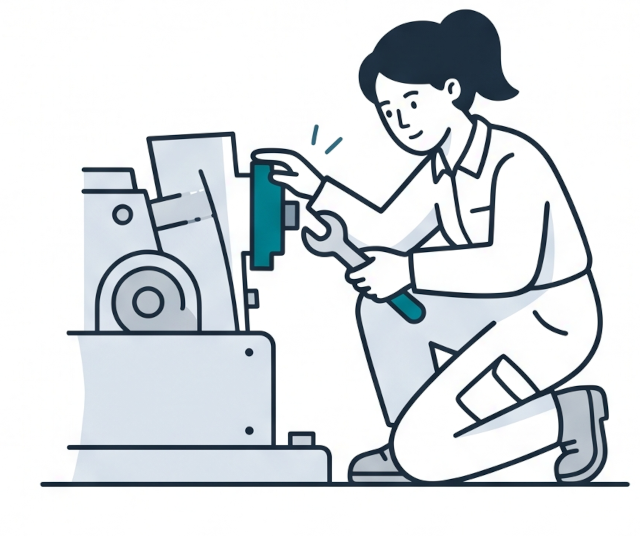
Practical engineering is sometimes reduced to “being good with your hands”. That is only part of it.
You need to be able to read technical instructions and drawings, choose and use tools safely, set up equipment accurately, measure your work and check that the finished result meets the specification.
When something does not fit or work as expected, you also need to find the cause rather than carry on and hope for the best.
The details vary by occupation. A fitter or fabricator may mark out parts, drill or cut metal to precise dimensions, assemble components and inspect the finished work. A CNC machinist sets up and operates computer-controlled cutting equipment, adjusts settings and checks parts with precision measuring tools.
Depending on the role, a lift engineer may interpret wiring and layout diagrams, install or calibrate control systems, service equipment, carry out safety checks and record the results.
Employers need evidence that you can do this work consistently. Depending on the role and training route, that evidence might include inspection records, completed job sheets, practical assessments, portfolios, test results or work signed off by a competent supervisor.
Workplace habits matter too. Engineering teams rely on people who follow safety procedures, keep accurate records, communicate clearly and look after tools and equipment. These are not separate “soft skills”. They affect whether the job is safe, accurate and completed on time.
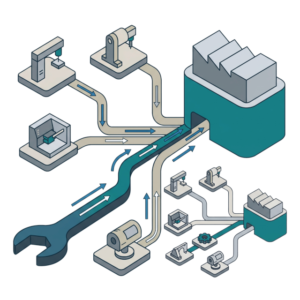
The employment outlook gives practical engineering routes real weight. Skills England projects employment in advanced manufacturing priority occupations to grow by around 47,000, or 13%, between 2025 and 2035. It also estimates replacement demand of 101,000 workers between 2026 and 2035, bringing total projected demand to around 148,000.
The 25 priority occupations include engineers, skilled metal and electrical workers, technicians, programmers and process operatives. These are indicative planning projections across a broad occupational group, not a count of current vacancies or guaranteed jobs.
Why practical engineering skills still matter
Factories and workshops are becoming more digital, but that does not remove the need for practical competence. It changes how people use it.
Skills England’s assessment uses a broad proxy definition of advanced manufacturing covering chemicals, electronics, electrical equipment, machinery, motor vehicles and other transport equipment. Across its 25 priority occupations, it estimates that 84% of projected additional employment will require qualifications at Level 4 or above. That figure applies to the full occupational mix, which includes professional and digital roles; it should not be treated as the entry requirement for every fitter, welder, machinist or lift-engineering job.
The assessment also identifies numeracy, digital literacy, problem-solving and decision-making as important skills, and reports strong demand and recruitment pressure across many priority occupations. Employers increasingly need people who can work with technical systems as well as physical equipment.
A modern machinist, for example, may use CAD/CAM software and CNC controls to prepare a job. The work still involves selecting tools, loading material, checking the setup and measuring the finished part. A computer can control the cutting path, but somebody must decide whether the output is correct and what to do when it is not.
The same principle applies as more tasks become automated. Skills England describes some roles as moving towards oversight and orchestration. People will still need to supervise machinery, interpret results and diagnose faults that a routine automated process cannot resolve.
Hands-on experience gives that technical knowledge context. It teaches you what a correct setup looks like, how materials and machines behave, and when a reading or finished part does not seem right.
Practical engineering is not low-tech
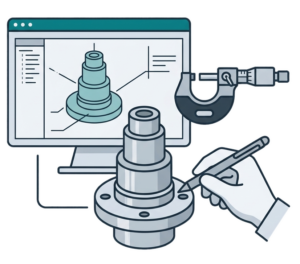
Workshop engineering now combines traditional equipment with software, digital controls and electronic testing. The balance differs between jobs, but few modern roles are purely manual.
CNC machining and digital fabrication
A machining technician may work with CNC mills, lathes or routers to cut metal and plastic. They use engineering drawings to select tools, set speeds and tolerances, load the material and monitor the operation.
After machining, they inspect the part with gauges or micrometers. Depending on the employer and role, the job may combine physical setup with CAD/CAM software and machine controls.
Quality inspection and testing
Fitters, fabricators, welders and machinists use precision instruments to check dimensions and identify defects. Results may be recorded in spreadsheets or specialist systems.
Depending on the product, sector and applicable standard, welds may also undergo non-destructive testing such as ultrasonic or dye-penetrant inspection, often carried out by appropriately qualified personnel. Producing the weld is only part of the process; inspection records may also be needed to show that it meets the specified acceptance criteria.
Welding and metal joining
Modern welding can involve automated or semi-automated equipment, robotics and computer-controlled settings. Welders still prepare surfaces, align joints, choose the right process and check the finished weld.
Digital controls, gauges and test equipment help manage welding parameters and check the finished work, but they do not replace judgement or careful preparation.
Lift engineering and electromechanical systems
Lift engineers work with mechanical, electrical and hydraulic equipment. They read circuit diagrams, test components, calibrate control systems and follow detailed safety checks.
A laptop may be used to diagnose a fault, while hand tools are needed to replace a motor, fit components or work on guide rails.
Fabrication from digital plans
Metal fabricators often begin with CAD drawings, then mark, cut, bend and join sheet metal or structural steel. Equipment may include hydraulic presses, CNC plasma cutters, conveyors and lifting systems.
The fabricator still needs to understand the drawing, choose the correct process and check the final assembly.
Practical and digital skills are now closely connected. Training in machining, welding or fabrication should cover current equipment as well as traditional hand tools.

GWI Core audience research also suggests that many UK internet users aged 16 to 24 who are interested in apprenticeships value learning and career progress. In data covering Q2 2025 to Q1 2026, 63% said learning new skills was important, while 43% were described as career-focused.
These findings relate to that defined online audience, not to all UK young people. Practical training is not a fallback for people without other options. It can be a direct route into skilled work, with room to develop further.
How to get into engineering: apprenticeships, college and direct entry
There is no single route into practical engineering. The right one depends on your experience, finances, confidence and the type of work you want to do.
Engineering apprenticeship
An apprenticeship is a paid job with structured training. You work for an employer, learn on the job and complete off-the-job study through a college or training provider. Many programmes take around 2 to 4 years, although the length depends on the occupation and level.
You gain work experience throughout the programme and complete a recognised qualification or apprenticeship standard. Applicants must usually be at least 16 and not in full-time education. Individual employers set their own entry requirements. Intermediate apprenticeships often ask for passes in English and maths, while many advanced programmes ask for around five GCSEs including those subjects.
College or training provider course
A full-time technical course can help you build workshop skills before applying for a job or apprenticeship. Options may include BTECs, T Levels and other vocational or technical engineering qualifications, depending on the provider and subject. The balance varies: some courses are mainly college-based with workshop practice, while T Levels also include an industry placement. Courses often take one or two academic years. You will not normally receive a wage, but you can concentrate on learning before moving into the workplace.
Direct entry or trainee roles
Some roles can be entered by starting as an engineering operative or trainee and progressing through workplace training. Direct applications are more common where the applicant already has relevant qualifications or experience. Check what supervision, training and competence assessment the employer provides – a job title alone does not guarantee a structured training route.
Short practical courses
A short course can introduce a process, refresh an existing skill or help you decide whether you enjoy the work. It may also meet a specific employer requirement. On its own, however, a course lasting a few days or weeks will rarely prove that you are ready for a full engineering role. It works best as part of a wider training plan.
Pay and employment status: Apprentices are employees. They receive a wage, paid holiday and paid time for apprenticeship training or study. From 1 April 2026, the apprentice minimum wage rate is £8 per hour for apprentices aged under 19 and for apprentices aged 19 or over who are in the first year of their apprenticeship. Apprentices aged 19 or over who have completed the first year are entitled to the minimum wage rate for their age. Rates normally change each April, so check GOV.UK before applying or accepting an offer.
College students are not paid a salary for attending a course, although funding or bursary support may be available in some circumstances.

Questions to ask before choosing an engineering route
A route that works well for one person may be a poor fit for another. Work through these questions before applying:
Do I need to earn while I train?
An apprenticeship gives you a wage from the start. A full-time college course gives you more time to focus on learning, but it does not usually provide an income.
Would I benefit from training before entering a workplace?
College can help if you want more practice with maths, technical drawings or workshop routines before taking on an employed role. Other learners prefer to build those skills in a real workplace.
What type of engineering work interests me?
Think about the work itself rather than relying on the job title. Do you prefer electrical systems or mechanical equipment? Would you rather work in one workshop or travel between sites? Do you enjoy precise small parts, large structures, fault-finding or making something from raw material?
What are the entry requirements?
Requirements vary between employers and programmes. Many Level 3 engineering apprenticeships ask for GCSEs at grades 9 to 4, including English and maths, but this is not a universal rule. Apprentices aged 16 to 18 who do not already hold suitable equivalent qualifications normally study English and/or maths alongside their apprenticeship.
For apprentices aged 19 or over, this is generally optional where the employer agrees, unless a mandatory qualification requires it. Check each vacancy rather than assuming that all apprenticeships use the same criteria.
Can I travel to the workplace and training provider?
Engineering sites are not always close to public transport, and some roles start early or involve travel. Check the location, working hours and college day before accepting an offer.
How will I prove competence?
Ask how practical work is assessed. An apprenticeship may use workplace observations, portfolios, tests and other assessment methods set out in the relevant apprenticeship standard. Assessment arrangements are changing in England during 2026 and 2027, so check the current standard or vacancy for the exact process.
A college course may require practical assignments and a portfolio. In a direct-entry role, ask which qualifications or certificates you will be expected to complete.
Who can help me compare the options?
A careers adviser, school, Jobcentre, training provider or employer can explain the day-to-day work and application process. You can also search the official Find an apprenticeship service and use our career pathways hub to compare individual occupations.
What to do next
Start with the job rather than the course title. Read about the daily tasks, working environment and skills involved. A route may sound appealing until you discover that it involves regular travel, working hours or a type of detailed work you do not enjoy.
Some practical exposure can make the decision easier. Attend an open day, try a workshop taster session or ask whether a supervised workplace visit, job-shadowing opportunity or properly arranged work-experience placement is available. Even a brief look at the equipment and working environment can help you decide whether to explore it further.
The career pathways hub has step-by-step guides to careers including engineering fitter, lift engineer, machining technician, metal fabricator and welder. You can also read about how apprenticeships work before applying.
Whichever route you choose, focus on building evidence. Employers want to see that you can follow instructions, work safely, check your own work and solve practical problems. A qualification matters, but so does being able to show what you have done and how well you did it.

Frequently asked questions about practical engineering careers
What skills do you need for engineering?
Practical engineering roles require a mixture of technical knowledge, safe working habits and hands-on ability. Common skills include reading drawings, setting up tools and machinery, measuring accurately, inspecting finished work, recording results and finding faults. The exact mix depends on the occupation. A welder, CNC machinist and lift engineer may all use different equipment, but each must be able to work safely and prove that the finished job meets the required standard.
Do you need an apprenticeship to start an engineering career?
No. An apprenticeship is a common route because it combines paid work with structured training, but it is not the only option. You can begin with a college course, enter a junior role with workplace training or build specific experience through short courses and practical projects. Employers will still expect evidence that you can do the work safely and consistently.
Can you get into engineering without university?
Yes. Many practical engineering and technician roles do not require a degree. Fitting, lift engineering, machining, fabrication and welding all have non-university entry routes, which may include apprenticeships, vocational courses, trainee roles or workplace training. The available route and entry requirements vary by occupation and employer. A university degree is more common in some design, research and management roles. You can also progress to higher qualifications later if your job or career plans require them.
Is a short engineering course enough to get a job?
Usually not on its own. A short course can teach one process, help you practise a weak area or show an employer that you have taken the initiative to learn. Most engineering jobs require broader training, relevant experience or a recognised qualification. Treat a short course as one part of your evidence rather than a complete career route.
Do you get paid for an engineering apprenticeship?
Yes. An apprentice is an employee and must be paid at least the minimum wage that applies to their age and apprenticeship stage. From 1 April 2026, the apprentice rate is £8 per hour for apprentices aged under 19 and for apprentices aged 19 or over who are in the first year of their apprenticeship. Apprentices aged 19 or over who have completed the first year must receive at least the minimum wage rate for their age. Employers can pay more. Apprentices also receive employment rights including paid holiday and pension contributions where eligible.
What GCSEs do you need for an engineering apprenticeship?
Employers set their own recruitment requirements. Some Level 3 engineering vacancies ask for around five GCSEs at grades 9 to 4, often including English and maths, while others use different criteria or consider equivalent qualifications and experience. Read the individual vacancy carefully. English and maths requirements during the apprenticeship also depend on the apprentice’s age, existing qualifications and the relevant funding rules.
Is there an age limit for engineering apprenticeships?
There is no standard upper age limit for a regular apprenticeship. For an apprenticeship in England, you must be 16 or over, live in England and not be in full-time education. Foundation apprenticeships have separate age rules: they are generally open to people aged 16 to 21, with limited eligibility for some 22 to 24-year-olds. Apprenticeship systems differ across the UK, and the apprenticeship guidance in this article refers to England. Check the current rules and the requirements of the individual vacancy before applying.
Source: Government and industry data from Skills England, GOV.UK, the National Careers Service and the audience research listed below.
Sources used in this article
https://assets.publishing.service.gov.uk/media/6a3a691a30b491f55b3c4780/sna_advanced_manufacturing.pdf
Skills England: Sector Skills Needs Assessment: Advanced Manufacturing. Employment projections, replacement demand, priority occupations, qualification levels, numeracy, digital literacy, problem-solving and the changing effect of automation and generative AI.
Published: 1 June 2026. Updated: 23 June 2026. Figures include projected additional employment of about 47,000 between 2025 and 2035 and replacement demand of approximately 101,000 workers between 2026 and 2035. These are indicative planning projections, not current vacancies or guaranteed jobs.
https://www.gov.uk/government/publications/skills-england-annual-skills-report-and-sectoral-skills-needs-assessments-2026
Skills England: Annual Skills Report and Sectoral Skills Needs Assessments 2026. Publication page for the advanced manufacturing assessment and related sector reports.
Published: 1 June 2026. Last updated: 4 August 2026.
https://app.globalwebindex.com/chart-builder/insights-v2/30e6c29e-a00f-4cc0-ae3e-9ea60dfa158a
GWI Core: Learning new skills among UK 16 to 24-year-olds interested in apprenticeships. Supports the finding that 63% of the defined audience said learning new skills was important and that this audience was 28% more likely than average to say so.
Market: UK. Dataset period: Q2 2025 to Q1 2026. GWI: “UK internet users aged 16 to 24 who are interested in apprenticeships”. The link may require a GWI subscription.
https://app.globalwebindex.com/chart-builder/insights-v2/c599bd91-1f0e-46da-b9b7-e2ded2662d5b
GWI Core: Career-focused attitudes among UK 16 to 24-year-olds interested in apprenticeships. Supports the finding that 43% of the defined audience were described as career-focused and were 110% more likely than average to have this characteristic.
Market: UK. Dataset period: Q2 2025 to Q1 2026. GWI: “UK internet users aged 16 to 24 who are interested in apprenticeships”. The data describes a defined internet-user audience rather than all UK young people. The link may require a GWI subscription.
https://nationalcareers.service.gov.uk/job-profiles/maintenance-fitter
National Careers Service: Maintenance fitter job profile. Entry routes, workplace skills and duties including installation, servicing, planned maintenance, fault-finding and repair of industrial machinery.
The profile uses “maintenance fitter”, which may not correspond exactly with every Engineering Fitter apprenticeship or employer role.
https://nationalcareers.service.gov.uk/job-profiles/lift-engineer
National Careers Service: Lift engineer job profile. Routes into the occupation, electrical and mechanical work, installation, servicing, fault-finding, safety checks and work on lifts, escalators and moving walkways.
Duties and entry requirements vary between installation, maintenance, repair and modernisation roles.
https://nationalcareers.service.gov.uk/job-profiles/cnc-machinist
National Careers Service: CNC machinist job profile. Use of computer numerical control machinery, engineering drawings, machine setup, cutting speeds, tolerances, quality inspection and possible entry routes.
“CNC machinist” is used as familiar learner terminology. It is not necessarily interchangeable with the wider Machining Technician occupational standard.
https://nationalcareers.service.gov.uk/job-profiles/welder
National Careers Service: Welder job profile. Entry routes, preparation of materials, selection of welding procedures, equipment calibration, joining processes and inspection of completed welds.
Specific processes, approvals and competence requirements vary by material, sector and employer.
https://www.gov.uk/become-apprentice/pay-and-conditions
GOV.UK: Apprentice pay and conditions. Employment status, pay, holiday entitlement and paid time for apprenticeship training or study.
Apprentices are employees and must receive at least the minimum wage rate that applies to their age and stage of the apprenticeship.
https://www.gov.uk/national-minimum-wage-rates
GOV.UK: National Minimum Wage and National Living Wage rates. Current apprentice minimum-wage rate and the rules determining when the apprentice rate applies.
The apprentice rate is £8 per hour from 1 April 2026. Rates usually change each April and should be checked before publication or later revision.
https://www.gov.uk/government/publications/apprenticeship-funding-rules-and-assessment-plan-guidance-2026-to-2027
Apprenticeship funding rules and assessment plan guidance: 2026 to 2027. Current rules for apprenticeships starting in England from 1 August 2026, including eligibility, English and maths, off-the-job training and assessment arrangements.
Published: 22 April 2026. Last updated: 3 August 2026.
https://www.gov.uk/become-apprentice
GOV.UK: Become an apprentice. How apprenticeships work in England, general eligibility and the relationship between employment and off-the-job training.
https://www.gov.uk/apply-apprenticeship
GOV.UK: Find an apprenticeship. Official service for searching and applying for apprenticeship vacancies in England.
https://www.prospects.ac.uk/jobs-and-work-experience/apprenticeships/what-is-an-apprenticeship/
Prospects: What is an apprenticeship? General guidance on apprenticeships, including the absence of a standard upper age limit.
Apprenticeship rules differ across the UK. Current GOV.UK guidance should take precedence for England-specific eligibility.
Last reviewed: 4 August 2026