
This guide is for people in England who are looking into metal fabrication as a practical career, including school leavers, apprentices, adults retraining and those moving from another type of work.
Metal fabrication is a hands-on engineering route where people learn to make, shape, cut, join and assemble metal parts or structures. The work can look quite different from one employer to another. A fabricator making smaller workshop components may have a very different day from someone working on larger assemblies, structural sections or heavy plant parts.
Because of that variety, there is no single version of “the fabricator job” that fits every workplace. What matters for learners is understanding the usual ways into the trade, the kind of training involved, and how practical ability is built through supervised work, repetition, checking and evidence of competence.
This page covers the main routes into metal fabrication in England. It does not cover specialist approval-based routes such as coded welding, which sit outside this general careers guide.
What is a metal fabricator?
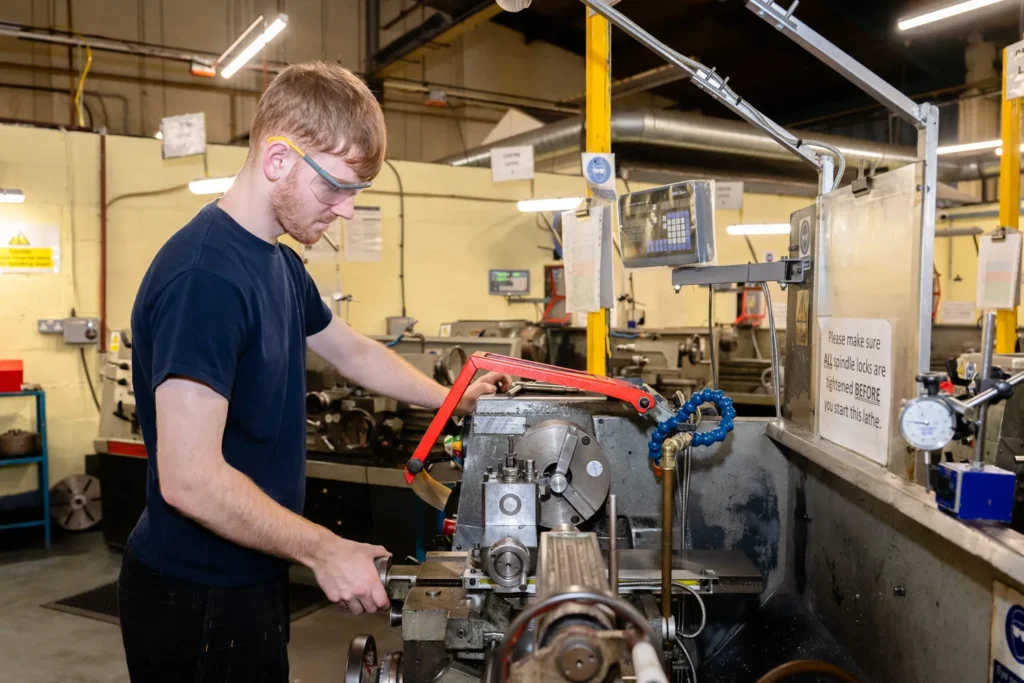
A metal fabricator makes, repairs, and assembles metal items and structures. Depending on the job, that can include sheet material, steel plate, sections, supports, frames, brackets, enclosures, and larger fabricated assemblies.
The role is wider than welding alone. Fabrication often includes preparing materials, marking out, cutting, shaping, fitting, assembling, and checking finished work against drawings or specifications. In some jobs, welding is one part of that process rather than the whole role.
The work matters because many industries rely on metal parts and structures that are the right size, fit correctly, and perform safely in use. Accuracy matters, and poor fabrication can create quality, safety, or installation problems later.
What does a metal fabricator do?
A metal fabricator’s day is usually built around practical production work, quality checks, and safe working. The exact tasks depend on the materials, equipment, and type of product being made or repaired.
Typical duties can include:
- Reading drawings, dimensions, templates, job sheets, and specifications
- Planning the order of work before starting
- Selecting and checking materials, tools, and equipment
- Measuring and marking out
- Cutting, drilling, shaping, forming, fitting, and assembling metal parts
- Using joining methods, including welding where the job requires it
- Moving and handling materials safely
- Checking fit, finish, alignment, and dimensional accuracy
- Recording work, inspections, or quality checks where required
- Following health, safety, environmental, and PPE requirements throughout the job
Some roles are heavily workshop-based. Others can include site work, repair work, installation support, or work on larger plant and structures. That is one reason job titles in this area can overlap with terms such as engineering fabricator, welder fabricator, or fabrication operative.
Table of Contents

What industries can a metal fabricator work in?
That can include sectors such as:
- Advanced manufacturing engineering
- Engineering construction
- Maritime
- Transport and heavy engineering
- Structural and architectural metalwork
- Plant, machinery, and equipment manufacture
- Repair and maintenance work
Common settings include:
- Fabrication workshops
- Manufacturing sites
- Engineering firms
- Construction-linked fabrication businesses
- Maintenance and repair operations
- Marine or offshore-linked engineering businesses
The product range can be very broad. Metal fabrication work can involve anything from smaller brackets, supports, and enclosures to larger assemblies, structural items, equipment supports, and heavy engineering components.
How do I become a metal fabricator in England? Training routes explained

There is more than one route into metal fabrication in England. The right option depends on your age, experience, finances, local availability, and whether you want paid work straight away or want to build skills first.
The most common routes are:
- An apprenticeship
- A college-based qualification route
- A specialist training-provider route
- Applying directly from relevant experience
- An NVQ or work-based qualification route
These routes do not all lead to the same type of outcome. Some are designed around paid employment and long-term occupational competence. Others are better for building confidence, workshop familiarity, or a first layer of practical skill before moving on.
Which metal fabricator route might suit me best?
- Apprenticeship: a strong fit if you want paid work, structured training, and a recognised occupational route.
- College course: useful if you want to build practical engineering or fabrication skills before applying for junior roles or apprenticeships.
- Specialist training provider: often suits adults retraining or learners who want shorter, focused practical training.
- Applying directly: usually makes more sense if you already have hands-on experience in manufacturing, engineering, assembly, or workshop work.
- NVQ or work-based qualification: best suited to people already working in a role where fabrication is part of the job and who need recognised evidence of competence from real tasks.
No single route is best for everyone. A paid apprenticeship may suit one learner, while another may need a college course, a short practical introduction, or a work-based qualification built around an existing job.
Pathway one: Metal fabricator apprenticeships in England

For many learners, the apprenticeship route is the clearest way into the occupation. An apprenticeship is a paid job with training, and to start one you must be 16 or over, living in England, and not in full-time education.
The Metal Fabricator apprenticeship in England is a Level 3 standard. The typical duration to gateway is 42 months depending on experience, role, and employer requirements., with the end-point assessment period separate –
This route usually combines real work, planned training, and time to build consistent practical ability. Depending on the employer, you may spend time learning how to work from drawings, prepare materials, use fabrication equipment safely, assemble metal components, check quality, and meet workplace standards across a range of jobs.
The apprenticeship route usually means:
- You are employed and paid
- Training is built into the programme
- You develop job-specific competence over time
- You build evidence through real work
- The exact tasks depend on the employer, sector, and type of fabrication work
You can search for vacancies through the government apprenticeship service. You can also search for providers delivering the Metal Fabricator standard. Elevated also offers the Level 3 Metal Fabricator Course.
What is EPA and what is gateway?
The apprenticeship does not end with everyday training alone.
- Gateway is the point where the employer and training provider decide that the apprentice is ready to move into the final assessment stage.
- EPA means end-point assessment. This is the independent assessment at the end of the apprenticeship. It checks whether the apprentice can meet the occupational standard.
Because assessment arrangements can change over time, it is worth checking the current apprenticeship standard and the latest end-point assessment guidance when comparing routes.
Pathway two: College metal fabrication qualifications

A college route usually means taking an engineering, fabrication, welding, or manufacturing course before moving into work or applying for an apprenticeship.
Course titles vary a lot. You may see titles such as:
- Engineering Operations (Fab & Weld)
- Fabrication and Welding
- Engineering Fabrication and Welding
- Performing Engineering Operations (Fabrication & Welding)
- Broader engineering courses that include fabrication, sheet metal, workshop practice, or welding units
That does not mean every course offers the same depth or leads to the same next step. Some are designed as first-stage practical introductions. Others are broader engineering programmes that include fabrication within a wider course.
This route can help build workshop confidence, safe working habits, measuring and marking-out skills, drawing awareness, and a better sense of how engineering jobs are carried out in practice.
Titles, entry requirements, delivery style, and qualification level vary by provider.
Pathway three: Specialist metal fabrication courses with a training provider

Specialist metal fabrication courses are often shorter and more focused than an apprenticeship. They can suit adults retraining, learners who want a practical introduction, or people who want more workshop exposure before committing to a longer route.
A shorter course may help with:
- Basic workshop confidence.
- Supervised practical time.
- Familiarity with tools, materials, and fabrication tasks.
- Measuring and marking out.
- Understanding simple drawings or job information.
- Safer working habits in an engineering setting.
One key difference is the outcome. Apprenticeships and NVQs lead to recognised awarding body qualifications (for example City & Guilds or EAL) that demonstrate occupational competence. Short courses may give you a certificate of attendance or completion, but this is not the same as a full qualification required for a skilled fabrication role. That difference matters when you compare what you will leave with at the end.
Provider formats vary widely. Some courses are part-time, some are intensive and some sit inside adult learning or wider engineering provision.
Pathway four: applying directly

Some people enter fabrication work by applying straight to employers rather than starting with a course. This tends to be more realistic when there is already some relevant practical background behind the application.
Useful experience might come from:
- Manufacturing operative roles
- Engineering workshop assistant work
- Assembly or fitting jobs
- Sheet metal, welding, or production support work
- General engineering environments where tools, measurements, quality checks, and safe working already matter
This route is usually not the easiest starting point for a complete beginner. Employers still need to see that you can work safely, follow instructions, handle practical tasks carefully, and build reliable results over time.
Pathway five: NVQ – work-based qualification

An NVQ (National Vocational Qualification) is a work-based route that is usually taken while employed. Instead of being built around attendance alone, it is built around what you can actually do in a real working environment.
That usually means gathering evidence over time. Depending on the qualification and provider, this may include:
- Assessor observation
- Completed work
- Workplace records
- Portfolio evidence
- Job-related documentation
- Feedback linked to the required units
Delivery can happen in the workplace, through a training provider, or through a mix of both.
This route is different from a short introductory course because it leads to a recognised qualification based on real work performance, rather than attendance alone. It can be a strong option for someone already in a fabrication-related job who needs recognised proof of competence. Some employers or sectors may still expect additional cards, approvals, or specialist assessments beyond the core qualification.
Becoming a metal fabricator with Elevated Knowledge
Elevated Knowledge offers a Level 3 Metal Fabricator apprenticeship route. Elevated is an apprenticeship provider in Stockport serving the North-West, Midlands and UK.
- Route type: Engineering Apprenticeship Level 3 Metal Fabricator
- Level: 3
- Delivery: In person
- Location: Stockport
- Typical duration to gateway / on-programme training: 42 months
- Typical EPA period: 3 months
- Coverage examples: work from drawings and specifications, quality and accuracy of your own work, health, safety and environmental responsibilities, and metal fabrication across a broad product range
Read the Elevated metal fabricator course page and apprenticeship page for more details.
Why become a metal fabricator?
This is not a shortcut trade. It takes time to build repeatable accuracy, safe habits, and practical judgement. For the right learner, though, it can offer a clear route into hands-on engineering work.
- What might I earn? Reliable public pay data specifically labelled metal fabricator is limited. As nearby official reference points, the current National Careers Service lists welder pay at £25,000 to £45,000 and engineering operative pay at £22,000 to £33,000. Those figures should be treated as cautious comparisons rather than exact metal fabricator pay bands.
- How long does it take? That depends on the route. On the apprenticeship route, the typical duration to gateway is 42 months depending on experience, role, and employer requirements – with the assessment period separate. College courses, training-provider routes, and work-based qualifications vary by programme, provider, and starting point.
- What are the working hours? Working hours vary by employer, shifts, overtime, and sector. As nearby official benchmarks, the current National Careers Service profiles list 40 to 46 hours a week for welders and 40 to 44 hours a week for engineering operatives.
- What are the working conditions? Metal fabrication can involve noisy workshops, heavy materials, hot work, awkward positions, dust, and physically demanding tasks. Some jobs are workshop-based, while others involve site work or operational environments. Protective clothing and task-specific PPE are common.
- What kind of work environments might suit me? This route often suits people who like practical work, using tools properly, reading drawings carefully, checking measurements, and working towards a finished result that has to be accurate enough for real use.
What happens after I’ve become a qualified metal fabricator?
Progress usually comes from experience, range, and responsibility. As your evidence and confidence grow, you may move onto more demanding assemblies, tighter tolerances, different materials, or more complex sectors.
Examples of progression can include:
- Moving into more complex fabrication work.
- Taking on larger structures or assemblies.
- Working in structural steel, sheet metal, maritime, heavy engineering, or engineering construction.
- Building towards inspection, quality, supervision, training, or assessing roles later on.
- Moving into specialist areas where extra approvals or sector-specific competence are needed.
What you’ll learn (learning outcomes)
The exact learning outcomes depend on the route, but most learners in this area build competence in a similar core set of practical skills. This usually includes:
- Preparing the work area and working safely
- Reading drawings, dimensions, specifications, and job information
- Selecting suitable materials, tools, and equipment
- Measuring and marking out correctly
- Cutting, shaping, fitting, and assembling metal
- Setting up fabrication equipment properly
- Moving and handling materials safely
- Checking finished work for fit, shape, finish, and dimensional accuracy
- Spotting common quality problems or errors
- Following inspection, recording, quality, safety, and environmental requirements
For apprenticeship and work-based routes, evidence of that competence also matters. It is not only about learning the task once, it is about demonstrating that you can repeat it to the required standard.
Pay and progression as a metal fabricator

This section separates two things that are often muddled together:
- Apprentice pay rules
- Typical pay for qualified workers in or near this occupation
Apprentice pay rules in England
From April 2026, the apprentice rate is £8.00 an hour. That rate applies if you are:
- Under 19, or
- 19 or over and in the first year of your apprenticeship
If you are 19 or over and have completed the first year, you must be paid at least the minimum wage rate for your age.
Apprentices must also be paid for the training time that forms part of the apprenticeship. Off-the-job training is built into the programme and must make up at least 20% of normal working hours.
Typical pay and hours for metal fabricators
Public wage data specifically labelled for metal fabricators is limited, so caution is sensible here. As nearby official reference points:
- Welder: £25,000 to £45,000, with typical hours of 40 to 46 a week
- Engineering operative: £22,000 to £33,000, with typical hours of 40 to 44 a week
Those figures are useful for rough planning, but they are not exact pay rates for every metal fabricator job. Actual earnings can vary by region, employer, overtime, shifts, complexity, materials, sector, and experience.

Frequently asked questions
What is the difference between metal fabrication, welding, sheet metal work and coded welding?
Metal fabrication is the broader field. It covers making, repairing, fitting, shaping, and assembling metal items or structures.
- Sheet metal work usually focuses more on thinner material, with more emphasis on cutting, folding, forming, and assembly.
- Welding is one joining process that may be part of fabrication work.
A fabricator may cut, shape, fit, assemble, and sometimes weld, depending on the role. A welder’s work is more directly centred on joining metal.
A coded welder works to a more specialist approval-based standard and is not the same as the broader entry route into metal fabrication.
These areas overlap, but they are not identical.
What is the difference between apprenticeship, college course, and NVQ routes?
- Apprenticeship: paid work plus structured training, leading to a recognised qualification and occupational competence.
- College course: a route for building knowledge and practical skill before moving into work or an apprenticeship.
- NVQ or work-based qualification: a recognised qualification based on evidence of competence built through real workplace tasks.
Apprenticeships and NVQs both lead to awarding body qualifications (such as City & Guilds or EAL). Short courses or introductory routes may not.
The route names sound similar, but they do not work in the same way.
What is the difference between plate work, sheet metal, and structural steel fabrication?
These are common directions within the wider fabrication world.
- Plate work usually involves heavier plate material and larger fabricated sections or components.
- Sheet metal work is more associated with thinner sheet, forming, folding, cutting, and enclosure-style work.
- Structural steel fabrication usually deals with larger steel sections and assemblies used in structural work.
A broad fabrication route can lead towards any of these areas later.
How do I find Metal Fabricator courses near me in England?
- For apprenticeships, use the government apprenticeship search and the apprenticeship training provider search.
- For college courses and other training, use the course search tools and then compare provider pages carefully.
What to ask when comparing Metal Fabricator training courses
Useful questions include:
- What practical tasks will I actually do?
- How much supervised workshop time is included?
- What safety training is built in?
- How is quality checked?
- What qualification or evidence will I leave with?
- Will I build workplace evidence, and if so how?
- What tools, materials, and processes will I use?
Do I need English and maths for a Metal Fabricator apprenticeship in England?
This depends on your age, your existing qualifications, and the current apprenticeship rules in England.
If you start the apprenticeship aged 16 to 18 and do not already hold suitable equivalent qualifications, you must achieve English and maths as part of completing the apprenticeship. If you start aged 19 or over, approved English and maths study can still form part of the training plan where the funding rules allow it and the employer agrees.
What is an apprenticeship EPA, and when does it happen?
EPA is the final independent assessment stage of the apprenticeship. It happens after gateway, when the apprentice is ready to be assessed against the occupational standard.
For the Metal Fabricator apprenticeship, the typical duration to gateway is 42 months depending on experience, role, and employer requirements – Elevated courses have a typical EPA period of 3 months.
What PPE do Metal Fabricators usually need?
PPE depends on the task, environment, and risk assessment. Common examples can include gloves, eye protection, hearing protection, safety footwear, high-visibility clothing, helmets, and respiratory protective equipment where needed.
What should I do next if I want to become a Metal Fabricator?
A sensible next step is to make a short plan:
- Choose the route that fits your starting point
- Check local vacancies and course options
- Compare what each route actually teaches
- Ask how safety, quality, and practical training are handled
- Work out what evidence you will have at the end to show an employer
What does Level 3 Metal Fabricator mean?
On the apprenticeship route, it means the occupation is delivered as a Level 3 standard in England. Level 3 apprenticeships sit at the same broad level as A levels.
What skills do you need to become a Metal Fabricator?
Useful skills and qualities include:
- Attention to detail
- Practical hand skills
- Confidence with measurements
- Safe working habits
- Willingness to follow instructions properly
- Ability to check your own work
- Patience and consistency
- Comfort using tools and equipment in an engineering setting
Is a welder fabricator the same as a Metal Fabricator?
Not always. In some workplaces the titles overlap. In others, a welder fabricator implies a role with a stronger welding element, while metal fabricator is used more broadly for making, fitting, assembling, and sometimes joining fabricated items.
How long does it take to become a Metal Fabricator in England?
There is no single answer across every route.
On the apprenticeship route, the typical time to gateway is 42 months, with the assessment period separate. College courses, short provider courses, and work-based qualification routes vary depending on the programme and your starting point.
Sources used in this article
- https://skillsengland.education.gov.uk/occupations/OCC0607
Skills England – Metal Fabricator occupation overview and duties.- https://skillsengland.education.gov.uk/apprenticeship-standards/st0607-v1-3
Skills England – Metal Fabricator Level 3 apprenticeship standard.
Published: 18 January 2019.
Last updated: 17 October 2024.- https://www.gov.uk/become-apprentice
GOV.UK – apprenticeship overview, eligibility, levels, and training basics.- https://www.gov.uk/apply-apprenticeship
GOV.UK – apprenticeship vacancy search in England.- https://findapprenticeshiptraining.apprenticeships.education.gov.uk/courses/399
Find apprenticeship training – provider search for Metal Fabricator Level 3.- https://www.gov.uk/become-apprentice/pay-and-conditions
GOV.UK – apprentice pay and paid training time.- https://www.gov.uk/national-minimum-wage-rates
GOV.UK – National Minimum Wage and National Living Wage rates.- https://www.gov.uk/government/publications/english-and-maths-requirements-in-apprenticeship-standards-at-level-2-and-above/english-and-maths-requirements-in-apprenticeships-guidance
GOV.UK – English and maths requirements in apprenticeships guidance.
Published: 4 May 2020.
Last updated: 19 February 2026.- https://www.gov.uk/government/publications/end-point-assessment-guide-for-apprentices-2024/end-point-assessment-guide-for-apprentices
GOV.UK – end-point assessment guide for apprentices.
Published: 7 February 2024.- https://www.gov.uk/guidance/support-your-apprentice-through-end-point-assessment
GOV.UK – gateway and end-point assessment guidance.
Published: 28 September 2021.- https://nationalcareers.service.gov.uk/job-profiles/welder
National Careers Service – welder job profile used as a cautious adjacent benchmark for pay, hours, progression, and working conditions.- https://nationalcareers.service.gov.uk/job-profiles/engineering-operative
National Careers Service – engineering operative profile used as a cautious adjacent benchmark for pay, hours, and working environment.- https://nationalcareers.service.gov.uk/find-a-course
National Careers Service – course search tool.- https://www.hse.gov.uk/ppe/index.htm
HSE – PPE at work guidance hub.
Last updated: 21 January 2026.- https://www.hse.gov.uk/ppe/overview.htm
HSE – overview of using PPE to control risks at work.
Last updated: 4 February 2026.- https://elevatedknowledge.co.uk/courses/metal-fabricator
Elevated Knowledge – Metal Fabricator apprenticeship page.- https://elevatedknowledge.co.uk/apprenticeships
Elevated Knowledge – apprenticeships page listing Metal Fabricator.- https://www.cityandguilds.com/qualifications-and-apprenticeships/engineering/mechanical/1782-nvq-diploma-in-fabrication-and-welding-engineering
City & Guilds – NVQ Diploma in Fabrication and Welding Engineering.- https://www.twi-global.com/technical-knowledge/job-knowledge/standards-application-standards-codes-of-practice-and-quality-levels-038
TWI – background explanation of standards, applications, and coded work terminology.Last reviewed: 28 April 2026