
This guide is for learners in England who are considering machining as a first engineering role, an apprenticeship route, a college or training-provider pathway, or a career change into practical technical work.
Machining technicians make accurate components using machine tools. In some workplaces, that means using conventional or manual machines, where the operator controls much of the setup and movement by hand. In others, it means working with CNC equipment – which is where computer-controlled machines are used to produce parts to tight specifications.
The route into machining is usually built around practical training, repeated hands-on work, and evidence that you can produce accurate parts safely and consistently.
This page explains how people in England typically start moving towards a machining technician role, what they are likely to learn, and how they build the skills and workplace competence needed to progress.
The exact role can vary depending on the employer, machine type, material, sector, site and shift pattern.
What is a machining technician?

A machining technician produces accurate components from metal or specialist materials using conventional and CNC machine tools. The work can involve lathes, milling machines, grinding machines, electro discharge machines, gear cutting equipment and CNC machining centres.
Machined parts may be used in machinery, aeroplanes, vehicles, domestic appliances, medical equipment or bespoke engineered products. Accuracy matters because a machined component may need to fit, move, seal, rotate or perform safely as part of a larger product or system.
The occupation sits within advanced manufacturing and engineering. That means the work is not just about removing metal from a block or bar. It is also about reading information, planning the job, choosing tools and workholding, setting up the machine, checking the result and keeping records.
What does a machining technician do?
A machining technician does more than press a button on a machine. The role can include planning the machining sequence, preparing tooling, setting up manual or CNC equipment, making controlled adjustments, checking components and reporting problems.
Common tasks can include:
- Reading engineering drawings, job sheets, technical data and work instructions.
- Checking materials before machining starts.
- Preparing the work area, machine, tooling, workholding and measuring equipment.
- Setting up conventional or CNC machine tools.
- Operating machinery safely.
- Setting or adjusting feeds, speeds, tooling or machine parameters where this is part of the role.
- Producing machined components to the required standard.
- Checking dimensions, surface finish and quality requirements.
- Using measuring equipment and inspection methods.
- Reporting faults, quality issues, tool wear or production delays.
- Completing machining documentation and job records.
- Keeping the work area clean and safe.
- Following health, safety, environmental and PPE requirements.
- Supporting continuous improvement activity where relevant.
A level 3 apprenticeship covers preparing and setting up conventional or CNC machines, operating and adjusting them, reading data and documentation, selecting tooling and workholding, setting feeds and speeds, measuring components and following inspection procedures.
Where a machining technician fits among machining job titles
Machining job titles can overlap. The title on a vacancy may depend on the employer, the machines used and the level of responsibility.
- Machining technician is the main role covered in this guide.
- CNC machinist usually means the role is focused on computer-controlled machine tools.
- Manual machinist usually means the role is focused on conventional machines such as lathes and milling machines.
- CNC setter/operator can be an entry or shopfloor role, depending on how much setup, adjustment and inspection is included.
- CNC programmer is usually a more advanced or specialist responsibility once someone has stronger machining experience.
Some learners use machining engineer when they mean a practical machining career, but it can also point towards production, manufacturing or process engineering roles. The apprenticeship training information includes job titles such as CNC machinist, manual machinist, machinist, machining technician, CNC machinist programmer and precision engineer.
Table of Contents

What industries can a machining technician work in?
Machining technicians can work wherever accurate machined parts are needed. The work is common in advanced manufacturing and engineering, but the exact setting can vary.
Possible sectors include:
- Advanced manufacturing.
- Engineering.
- Aerospace.
- Automotive.
- Maritime defence.
- Nuclear.
- Construction-related manufacturing.
- Machinery and equipment manufacturing.
- Medical equipment manufacturing.
- Domestic appliance or product manufacturing.
Common workplaces include:
- Machine shops.
- Engineering workshops.
- Manufacturing sites.
- Production environments.
- Precision engineering companies.
- Component manufacturers.
- Maintenance or repair-focused engineering environments, where the role includes machining tasks.
The machining technician occupational profile refers to advanced manufacturing and engineering, including aerospace, automotive, maritime defence, nuclear and construction sectors. It also refers to machined products used in machinery, aeroplanes, vehicles, domestic appliances and medical equipment.
How do I become a machining technician in England?

There is more than one route into machining. The right route depends on your age, current experience, location, confidence in a workshop and whether you want paid work straight away.
For a learner who wants to become a machining technician rather than simply try machining, the Level 3 apprenticeship is usually the clearest structured route. It combines paid work, training, workplace practice, evidence-building and end-point assessment.
Other routes can still be useful, especially for learners who need a foundation before applying for an apprenticeship, or adults who already have engineering or manufacturing experience.
The main routes are:
- Machining Technician Level 3 apprenticeship.
- Engineering and manufacturing college route.
- Specialist machining, milling and turning course with a training provider.
- Direct entry from engineering or manufacturing experience.
- Work-based engineering or machining competence route.
Apprenticeships in England combine practical training in a job with study. Apprentices are employees, earn a wage, work alongside experienced staff and receive training time related to the role.
Which machining technician route might suit me best?
- Apprenticeship: best if you want paid work, structured training and a clear route into machining technician competence.
- College route: best if you want to build engineering and manufacturing knowledge before applying for junior roles, apprenticeships or further training.
- Specialist training-provider course: best if you want shorter, focused practical exposure to machining, milling and turning.
- Direct entry: best suited to people who already have engineering, manufacturing, workshop, machine-operation or production experience.
- Work-based competence route: best if you are already working around machining or engineering tasks and need to build recognised evidence of competence.
The best route depends on your age, budget, location, current experience, workshop confidence and whether you want paid work straight away or skills-building first.
Pathway one: machining technician Level 3 apprenticeship

A machining technician apprenticeship is a paid job with training. It is the main route for this page because it gives learners a structured way to build practical skill, technical understanding and workplace evidence over time.
- During an apprenticeship, you work, get paid, train and build competence. You may work with real machines, materials, drawings, tooling, measuring equipment and quality checks. The exact work depends on the employer, machine type, sector and site.
- Machining technician is a Level 3 apprenticeship in engineering and manufacturing. The course duration is 42 months.
- The Skills England apprenticeship standard is ST1305. Version 1.5 has an earliest start date of 25 June 2024.
- The typical on-programme training period is 42 months, followed by a typical 3-month end-point assessment period. The assessment methods are a practical demonstration with questions, an interview underpinned by a portfolio of evidence, and a knowledge test.
- You can search and apply for apprenticeships in England through the Find an apprenticeship service. You can search by job title and location, and it can help to try wording such as machining technician, machining apprenticeship, machinist apprentice and CNC machinist apprentice.
What is EPA and what is gateway?
End-point assessment, or EPA, is the final independent assessment at the end of an apprenticeship. It tests whether the apprentice can perform the occupation and demonstrate the required duties, knowledge, skills and behaviours.
Gateway is the point before EPA. It is reached when the required on-programme training and any mandatory requirements have been completed, and the apprentice is considered ready to move into assessment.
For this apprenticeship, the level 3 portfolio of evidence supports the interview assessment. It is built during the on-programme period and should contain evidence related to the knowledge, skills and behaviours assessed through that method.
Pathway two: engineering and manufacturing college route

A college route usually means completing an engineering or manufacturing course before applying for junior roles, apprenticeships or further training. This may suit learners who are not ready to apply for an apprenticeship yet, or who want to build foundation knowledge before entering a workplace route.
Relevant college routes can include advanced manufacturing and engineering, performing engineering operations, mechanical engineering, and the T Level in Engineering, Manufacturing, Processing and Control. Entry requirements vary by provider and course.
- The Engineering, Manufacturing, Processing and Control T Level is a Level 3 qualification. It is a 2-year course and includes a minimum 9-week industry placement.
- The Machining and Toolmaking Technologies occupational specialism is aligned to Machining technician on the Skills England qualification information.
A college course is not the same as becoming fully competent in a machining technician job. It can help with foundation learning, but most learners still need supervised practice, workplace experience and evidence of competence before working independently.
Pathway three: specialist machining, milling and turning course with a training provider

A specialist machining, milling and turning course can be useful when you want a shorter, focused introduction to workshop practice. It may suit adult learners, career changers, students entering engineering pathways, apprentices building core workshop skills, or developing technicians who need supervised practice.
This kind of course can help you understand machine setting, workholding, turning, drilling, boring, thread cutting, milling, feeds and speeds, coolant use and accurate work positioning. It should be treated as a foundation or skills-building option, not as proof that someone is ready to work independently as a machining technician.
Elevated Knowledge has a beginner-level, 5-day, in-person Machining (Milling & Turning) course delivered in Stockport. It is a practical introduction to machining methods and workholding techniques through hands-on turning and milling.
Pathway four: direct entry from engineering or manufacturing experience

Some people move into machining by applying directly for jobs. This is usually more realistic when the person already has relevant experience, rather than starting from nothing.
Useful backgrounds may include engineering operative, manufacturing operative, machine operator, production technician, workshop assistant, mechanical technician or a similar hands-on role. Employers may look for safe working, reliability, the ability to follow instructions, measuring skills, attention to detail and evidence of consistent practical work.
Direct application for CNC machinist roles is possible when someone has experience working with CNC machine tools in engineering or manufacturing.
Engineering operative roles can also connect to machining because the work can include following engineering plans, setting up and operating computer-controlled machinery, making machine parts with lathes, cutters and grinders, and carrying out inspections and quality checks.
Direct entry should not be treated as the easiest route for a complete beginner. Even with related experience, a learner may still need training, supervision, machine-specific authorisation and time to build competence.
Pathway five: work-based engineering or machining competence route

A work-based competence route is most relevant when you are already working in engineering, production, manufacturing or a machining-related environment.
This route usually depends on real tasks, workplace evidence, observation and assessor judgement. Learners may build a portfolio or evidence record, depending on the qualification or programme. Delivery may involve a workplace, college, training provider or apprenticeship provider.
This differs from a short introductory course because it is based on evidence from actual work, not only attendance or supervised practice. It may still need to be combined with extra training, employer sign-off or machine-specific authorisation for particular tasks, machines, materials or safety procedures.
Where you are comparing this route with an apprenticeship, check exactly what qualification, evidence and assessment you will complete. Do not assume every work-based route leads to the same outcome as a Level 3 apprenticeship.
Becoming a machining technician with Elevated Knowledge
Elevated Knowledge offers the Engineering Apprenticeship Level 3 Machining Technician route. This is the main Elevated route for learners considering machining technician as an occupation.
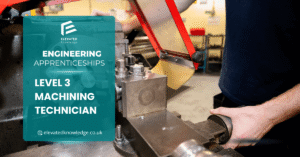
The route is listed as Level 3, 42 months, in-person delivery in Stockport, and ST1305 Machining technician Level 3. It covers setting up machines, monitoring and correcting them, conventional and CNC machining, interpreting information, producing precision components, inspection, reporting, documentation, housekeeping and safe working.
Elevated Knowledge also has a Machining (Milling & Turning) course. This may be relevant for learners who want a shorter, focused introduction to machining, milling and turning. It should sit underneath the apprenticeship route, not replace it.
Why become a machining technician?
Machining may suit you if you like practical, accurate work. It involves machines, tools, measurements, drawings and quality checks. You need patience because small errors can affect how a part fits or works.
It may also suit you if you want a route into engineering or manufacturing without starting with a university degree. The apprenticeship route lets a learner train while working, although entry still depends on vacancies, employer requirements and provider requirements.
Machining can appeal to learners who are interested in CNC, manual machining, milling, turning and inspection. The work is often quality-sensitive because machined parts may be part of a larger machine, vehicle, assembly or product.
Working conditions vary. CNC machinist roles may involve factory or workshop settings, noisy environments, protective clothing, and evenings or weekends on shifts.
What happens after I’ve become a qualified machining technician?
Progression is usually built through time on the job, broader machine experience, quality evidence, reliability, accuracy and responsibility. There is no single guaranteed next step.
With experience, a person may move towards more complex machining, CNC setting, CNC programming, inspection and quality control, workshop supervision, team leading, training, toolmaking, precision engineering, metrology-focused quality work, production engineering or manufacturing engineering.
CNC machinist progression can include supervisory roles, workshop management, inspection and quality control, training, and machine software programming.
What you’ll learn
What you learn depends on the route, employer and provider. The common thread is repeatable competence: safe working, accurate setup, controlled machining, inspection and documentation.
A machining technician route may include:
- Working safely in an engineering or machining environment.
- Preparing the work area and following PPE rules.
- Reading engineering drawings, job sheets and technical data.
- Understanding materials and checking material suitability.
- Selecting or preparing tools, workholding and equipment.
- Setting up conventional or CNC machine tools.
- Operating milling, turning or other machining processes.
- Understanding feeds, speeds, tolerances and quality checks at a beginner-appropriate level.
- Inspecting components using appropriate measuring equipment.
- Recognising common machining issues such as wrong dimensions, poor finish, tool wear or incorrect setup.
- Recording work and completing documentation.
- Maintaining housekeeping and safe machine shutdown or isolation where relevant.
- Building workplace evidence for assessment where the route requires it.
The Machining technician Level 3 apprenticeship includes knowledge, skills and behaviours covering health and safety, engineering drawings, materials, tooling and workholding, machining processes, quality assurance, measurement, documentation, housekeeping, machine setup, machine operation, inspection and continuous improvement.
Pay and progression as a machining technician

It helps to separate pay out two topics:
- Apprentice pay rules.
- Typical pay for qualified machining roles.
Apprentice pay is controlled by minimum wage rules. Qualified pay varies by job title, employer, location, sector, machine type, shift pattern, overtime, responsibility and experience.
Apprentice pay rules in England
From April 2026, the apprentice minimum wage rate is £8 per hour.
- Apprentices are entitled to the apprentice rate if they are aged under 19, or aged 19 or over and in the first year of their apprenticeship.
- Apprentices aged 19 or over who have completed the first year of their apprenticeship are entitled to the minimum wage rate for their age.
Apprentices must be paid for time spent doing work-related learning or training, including training outside normal working hours or away from the usual workplace.
Typical pay and hours for machining technicians and machinists
Public pay data for the exact title “machining technician” is limited – the closest official public benchmark is a CNC machinist, so it should be treated as a guide for CNC machinist-type roles rather than a guarantee for every machining technician job.
CNC machinist pay is given as £25,000 for starter roles and £42,000 for experienced roles. Typical hours are given as 40 to 44 a week.

Frequently asked questions
How do I find machining technician apprenticeships near me in England?
Use the official gov.uk find an apprenticeship service to search and apply for apprenticeships in England. Search by job title and location. Try several terms, such as machining technician, machining apprenticeship, machinist apprentice and CNC machinist apprentice.
It is also worth checking training provider pages, including Elevated Knowledge’s Engineering Apprenticeship Level 3 Machining Technician page, where relevant to your location and route.
How do I find machining courses near me in England?
Start with local colleges, the National Careers Service course search, T Level providers and training providers that offer machining, milling and turning courses. Search for terms such as machining courses, CNC machinist training, metal machining courses, manual milling course, milling and turning, and machining training near me.
When comparing courses, check what the course includes, how much supervised workshop time is provided, and whether it is an introduction, a qualification, an apprenticeship or work-based assessment.
What should I ask when comparing machining training courses?
Ask practical questions before applying:
- What machines will I use?
- Will I practise milling, turning or both?
- Is CNC included, manual machining included, or both?
- How much supervised workshop time is included?
- What safety training is included?
- What measuring and inspection skills are covered?
- What qualification, certificate or evidence will I leave with?
- Does it help me apply for an apprenticeship or junior role?
- Is it an introduction, a work-based qualification or an apprenticeship?
These questions matter because a short attendance-based course, a college programme, a work-based competence route and an apprenticeship can all have different outcomes.
Do I need English and maths for a machining technician Level 3 apprenticeship in England?
Requirements depend on age, route and existing qualifications. Apprentices aged 16 to 18 at the start of training must achieve English and maths qualifications to complete their apprenticeship if they do not already hold suitable equivalents. Apprentices aged 19 or over can also be funded to study up to an approved Level 2 qualification in English or maths if they do not already hold suitable equivalents and their employer agrees this should be part of their training plan.
Always check the latest apprenticeship funding rules, provider requirements and employer requirements before applying, especially if you are an adult learner.
What is an apprenticeship EPA, and when does it happen?
EPA is the final independent assessment at the end of an apprenticeship. It happens after training, once the gateway requirements have been met.
For the machining technician Level 3 apprenticeship, the typical EPA period is 3 months. The assessment methods include a practical demonstration with questions, an interview underpinned by a portfolio of evidence, and a knowledge test.
What PPE do machining technicians usually need?
PPE means personal protective equipment. Exact PPE depends on the task, machine, site rules and risk assessment. It may include eye protection, safety footwear, hearing protection, protective clothing and other task-specific equipment.
Workers may have to wear PPE such as safety helmets, gloves, eye or hearing protection, high-visibility clothing, safety footwear and harnesses where a risk assessment shows it is needed.
There is an important machining-specific caution: gloves can be dangerous near rotating machinery. Engineering workshop guidance highlights the need to prevent glove wearing close to rotating machinery such as drills and lathes, and to avoid loose clothing, long hair and jewellery when operating engineering machinery.
How long does it take to become a machining technician?
It depends on the route. The machining technician Level 3 apprenticeship has a 42-month course duration. The typical on-programme training period is 42 months and the typical EPA period is 3 months.
Shorter courses may introduce machining skills, workshop practice and terminology, but they should not be treated as equivalent to completing the apprenticeship.
What qualifications do you need to become a machining technician?
Requirements vary by route and provider. For an advanced apprenticeship route, learners will usually need 5 GCSEs at grades 9 to 4, or equivalent, including English and maths.
Direct entry may depend more on experience and employer requirements. College routes and training-provider courses set their own entry requirements.
Do you need an apprenticeship to become a machinist?
Not always. Some people enter through college, direct application or work-based routes. Direct application for CNC machinist roles is more realistic when someone already has CNC machine tool experience in engineering or manufacturing.
For a learner who wants a structured route into becoming a machining technician, the Level 3 apprenticeship is the main route this page signposts.
What should I do next if I want to become a machining technician?
Decide whether you are looking for an apprenticeship, college route, short practical course, direct-entry route or work-based competence route.
Then:
- Search for apprenticeship vacancies.
- Compare local college and training-provider options.
- Check whether the course includes CNC, manual machining, milling, turning, safety and inspection.
- Ask what qualification, certificate or evidence you will leave with.
- Check whether the route builds workplace evidence, not just attendance.
- Read the Elevated Engineering Apprenticeship Level 3 Machining Technician course page if you are considering the apprenticeship route.
What is the difference between a machining technician, a CNC machinist and a machinist?
Machining technician is the main role for this page and usually means someone who produces accurate machined components using machine tools. CNC machinist usually focuses on computer-controlled machines. Machinist is a broader job title that can cover manual machining, CNC machining or both. Job titles vary by employer.
What is the difference between milling and turning?
Milling usually uses a rotating cutting tool to remove material from a fixed workpiece. It can create flat faces, slots, pockets, holes and shaped features. Example features include slots in brackets, pockets in housings and flat mounting faces.
Turning usually rotates the workpiece while a cutting tool shapes it. It is often used for round or cylindrical parts. Example parts or features include shafts, pins, bushes, threaded sections and round spacers.
What is the difference between CNC machining and manual machining?
CNC machining uses computer-controlled machine tools. Manual machining uses machines where the machinist controls more of the movement and setup by hand.
Many workshops use both. A machining technician may need to understand both, depending on the role, employer and machines used.
Is a CNC setter/operator the same as a CNC programmer?
Not always. A CNC setter/operator may load tools, set the machine, run jobs, monitor production and check parts. A CNC programmer writes or edits the instructions the CNC machine follows. In some workplaces, one person may do both. Programming is often a more advanced or specialised responsibility.
Is a machining technician the same as a machining engineer?
Not exactly. Machining technician usually refers to the practical occupation producing and checking machined components. Machining engineer may be used loosely by learners searching online, but it can also point towards engineering, process, production or manufacturing roles. This guide is focused on becoming a machining technician.
Sources used in this article
- https://skillsengland.education.gov.uk/apprenticeship-standards/st1305-v1-5
Skills England – Machining technician apprenticeship standard, ST1305, EPA definition and version information.
Page published: 25 June 2024.- https://findapprenticeshiptraining.apprenticeships.education.gov.uk/courses/691
Find apprenticeship training – Machining technician Level 3 apprenticeship information, duration, training category, knowledge, skills, behaviours and related job titles.- https://nationalcareers.service.gov.uk/job-profiles/cnc-machinist
National Careers Service – CNC machinist roles, routes, college examples, advanced apprenticeship entry benchmark, pay, hours, working environment, direct application and progression examples.- https://nationalcareers.service.gov.uk/job-profiles/engineering-operative
National Careers Service – Engineering operative route, relevant tasks and progression into CNC machining.- https://www.gov.uk/become-apprentice
GOV.UK – Used for how apprenticeships work in England, including paid employment, study and training time.- https://www.gov.uk/apply-apprenticeship
GOV.UK – Find an apprenticeship, apprentice eligibility and search information in England.- https://www.gov.uk/national-minimum-wage-rates
GOV.UK – April 2026 minimum wage and apprentice rate rules.- https://www.gov.uk/government/publications/english-and-maths-requirements-in-apprenticeship-standards-at-level-2-and-above/english-and-maths-requirements-in-apprenticeships-guidance
GOV.UK – English and maths apprenticeship requirements.- https://www.acas.org.uk/apprentices/pay
Acas: Advisory, Conciliation and Arbitration Service – Apprentice pay during work-related learning or training time.- https://www.hse.gov.uk/ppe/overview.htm
HSE – General PPE examples and risk-assessment-led PPE wording.- https://www.hse.gov.uk/engineering/getting-started.htm
HSE – Engineering workshop safety, including rotating machinery, gloves, loose clothing, long hair and jewellery.
Last updated: 24 February 2025.- https://www.tlevels.gov.uk/students/subjects/engineering-manufacturing-processing-control
T Levels – Engineering, Manufacturing, Processing and Control T Level duration, level and industry placement information.- https://skillsengland.education.gov.uk/qualifications/TL0009b
Skills England – T Level in engineering, manufacturing, processing and control.- https://elevatedknowledge.co.uk/courses/machining-technician
Elevated Knowledge – Engineering Apprenticeship Level 3 Machining Technician course page, including level, duration, delivery, location, occupational profile, EPA period and route content.- https://elevatedknowledge.co.uk/courses/machining-milling-turning
Elevated Knowledge – Machining (Milling & Turning) course information, including course purpose, duration, level, delivery and content.Last reviewed: 5 May 2026