UK manufacturing needs skilled people to keep production moving, improve how things are made and put new technology to work. That includes engineers developing automated systems, technicians maintaining equipment and skilled tradespeople producing the components those systems depend on.
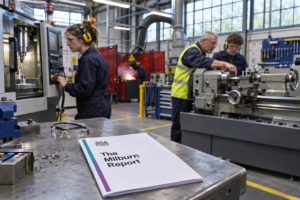
Skills England’s advanced manufacturing assessment looks at how that demand could develop by 2035. Published alongside its 2026 annual skills report, it is one of ten sector assessments examining current and future skills needs. The wider report considers the challenges facing England’s skills system and how training can better support economic priorities.
The findings provide a useful picture of where manufacturing is heading. They also raise a practical question for the sector: how do we develop the people needed to support that future while retaining the knowledge already on the workshop floor?
What Does the Report Say About Manufacturing Skills?
The advanced manufacturing assessment projects demand for around 47,000 additional workers in priority occupations by 2035, alongside approximately 101,000 needed to replace people leaving those occupations.
Combined, that represents around 148,000 workers. These figures relate to identified priority occupations within advanced manufacturing, rather than the entire UK manufacturing workforce.
Replacement demand is the larger part of that figure. The sector needs to bring people through to sustain its existing capabilities as well as support growth.
The assessment identifies engineering professionals, technicians, skilled metal and electrical workers, and digital specialists among its priorities. Its projections are indicative, with uncertainty around technological change and AI. They should inform discussion and planning rather than be treated as fixed recruitment targets.
For engineering, the implication is straightforward. Developing new capabilities and passing on established skills need to happen together.
Which Engineering Roles Will UK Manufacturing Need?
The report uses broad occupational categories. On the factory floor, those categories translate into people with distinct responsibilities who need to work effectively together.
Maintenance Engineers and Technicians
Reliable production depends on people who understand equipment, recognise deterioration and investigate faults properly.
An automated line might stop because of a worn bearing, a misaligned sensor or an intermittent electrical connection. Finding the cause requires a methodical approach and an understanding of how the machine operates. Repeatedly resetting it will not resolve the underlying problem.
Maintenance engineers and technicians connect production requirements with the condition of the equipment. Their contribution includes planned maintenance, fault diagnosis and identifying changes that could prevent further failures.
As manufacturing equipment develops, training needs to preserve sound mechanical and electrical principles while giving technicians experience of the systems they will encounter.
Electrical, Electronics and Controls Specialists
Motors, drives, sensors and control systems allow automated equipment to operate as a coordinated process. Electrical, electronics and controls specialists help design, maintain and troubleshoot those systems.
A machine failing to complete a sequence could have a physical fault, an incorrect signal or an issue within its control logic. Resolving it often requires different disciplines to compare what the equipment should be doing with what is actually happening.
This makes communication between specialists important. Someone investigating a control fault needs information from operators and maintenance staff, while those colleagues need a clear explanation of the findings.
Developing these roles means combining technical knowledge with practical understanding of production equipment and safe working methods.
Machining Technicians and Engineering Fitters
Modern manufacturing still relies on accurate components and correctly assembled machinery.
Machining technicians interpret drawings, select tooling, set up work and check that finished parts meet specification. Computer-controlled equipment supports the process, but decisions about workholding, cutting conditions and measurement still require engineering knowledge.
If a dimension begins to drift, someone must establish why. Tool wear, temperature, material variation and the setup itself may all need consideration.
Engineering fitters apply similar care when assembling, aligning and testing equipment. Individually acceptable components must work together as a functioning assembly. These practical skills provide a foundation for both established production methods and new manufacturing technology.
Welders and Metal Fabricators
Welding and fabrication turn drawings and material into structures, assemblies and finished products.
The work involves preparation, joint fit-up, dimensional accuracy and understanding how heat can affect an assembly. A sound fabrication process considers these factors before welding begins.
Automation also depends on this knowledge. A welding system needs suitable fixtures, consistent component presentation and an appropriate inspection process. Where parts vary or access is difficult, the practical judgement of skilled workers becomes particularly valuable.
Developing welding and fabrication skills therefore needs to cover the whole job, from interpreting the drawing to checking the completed assembly.
Production, Process and Quality Specialists
Manufacturing performance depends on understanding why a process produces a particular result.
A recurring defect may appear at one operation while originating somewhere else. A machining problem could be linked to incoming material, inconsistent workholding or an unsuitable inspection method.
Production and process engineers investigate how operations interact. Quality technicians contribute through measurement, inspection and reliable records.
These roles help teams move from identifying a problem to establishing its cause and testing a workable improvement. Their value comes from connecting evidence with an understanding of what happens during production.
Software and Digital Specialists
The assessment projects around 7,500 additional programmers and software development professionals in advanced manufacturing by 2035, the largest projected increase among its priority occupations. It also acknowledges uncertainty about how AI could affect demand for digital roles.
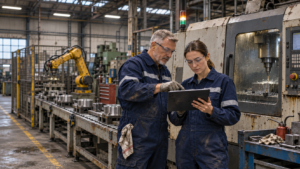
In practice, manufacturing software needs to serve a clear operational purpose. A machine-monitoring system is useful when its information helps people identify a problem, make a decision or improve performance.
That requires cooperation between digital specialists and the people who understand the equipment and process. Reliable data, sensible alerts and clear responsibilities all matter.
The sector needs people who can make those connections and turn digital capability into useful engineering applications.
How Can the UK Develop the Engineering Workforce It Needs?
The response needs coordination between employers, training providers, education and government. Training provision must reflect real engineering work, and learners need opportunities to develop competence in the workplace.
Employers can contribute by explaining where skills are missing, supporting apprenticeships and helping training providers understand changing equipment and processes. That gives providers a clearer basis for developing relevant training.
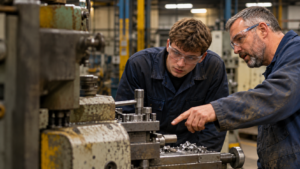
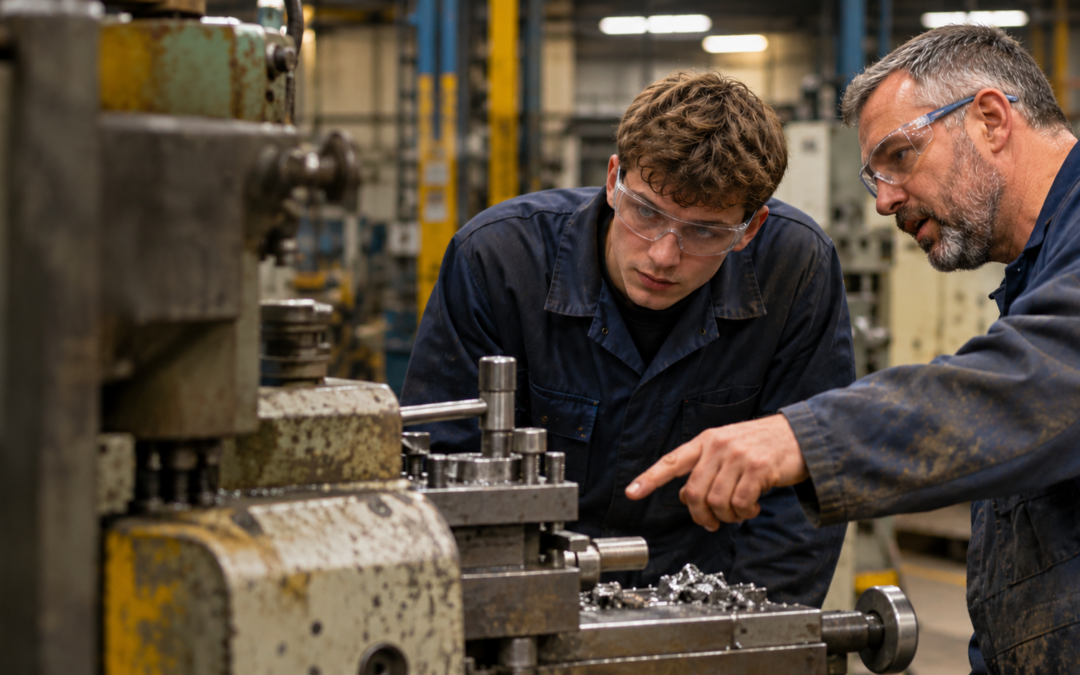
Passing on experience deserves equal attention. An experienced fitter or maintenance technician may recognise a developing fault through sound, movement or the history of a machine. Some of that knowledge can be documented, but much of it needs demonstration, supervised practice and discussion.
Apprenticeships create an opportunity for that transfer to happen. To make it effective, experienced employees need time to teach, and apprentices need progressively more demanding work as their competence develops.
Existing employees also have a part in the sector’s future. Further technical training can help them build on their experience, take on different responsibilities and work confidently with unfamiliar equipment.
Supporting the Next Generation of Engineers
At Elevated Knowledge, we support engineering skills development through apprenticeships in areas including maintenance, machining, engineering fitting, welding and metal fabrication. We also provide technical training to help existing employees develop their knowledge and practical skills.
The report provides a national view of the work ahead. Progress will depend on the training opportunities created across the sector and the quality of experience people gain through them.
For manufacturers looking to contribute, taking on an apprentice or developing an existing employee is a practical place to start. Speak to our team about the training routes available and how they could support your workforce.