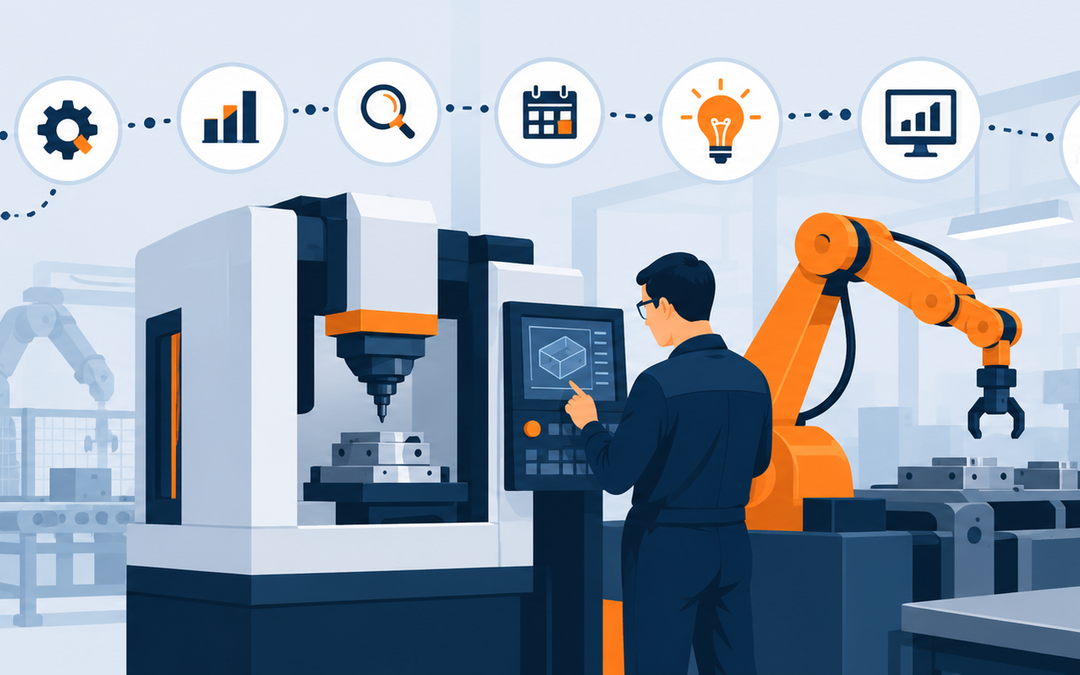
Artificial intelligence (AI) and automation are changing how engineering and manufacturing businesses operate. From identifying potential equipment faults to improving production planning, these technologies are helping manufacturers work more efficiently.
But can AI replace the practical skills, experience and judgement needed on the factory floor?
While technology can support many engineering tasks, skilled people remain essential. Apprenticeships continue to play an important role in developing the next generation of engineers, machinists, welders and fitters who can work confidently alongside new technology.
How Is AI Changing Engineering and Manufacturing?
AI is creating new opportunities for manufacturers to improve productivity, reduce downtime and make better use of their equipment.
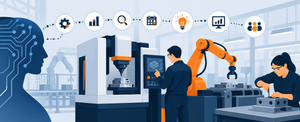
For example, AI systems can analyse machine data to identify signs of wear before equipment breaks down. They can also support production scheduling, quality inspections and decisions about maintenance.
However, AI adoption across UK manufacturing is still developing.
According to Make UK’s 2026 AI, Skills and the Future of UK Manufacturing report, only 2% of manufacturers say AI is widely used across their operations, while more than half identify skills shortages as a major barrier to adoption.
This highlights an important challenge. Investing in new technology is only part of the solution. Businesses also need people who understand how to use it effectively.
For employers, the focus shouldn’t simply be on introducing AI, but on developing a workforce with the skills to make it useful.
Can AI Replace Skilled Workers in Engineering and Manufacturing?
AI can process information, identify patterns and support decision-making, but it cannot independently carry out every task required in a real engineering environment.
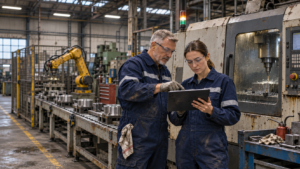
Consider a maintenance engineer responding to a machine breakdown. An AI system might analyse performance data and suggest a possible fault, but someone still needs to inspect the equipment, assess the situation and carry out repairs safely.
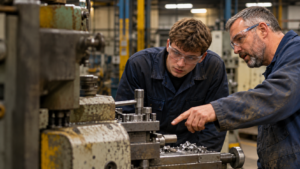
The same applies across other engineering roles. A CNC machine can follow programmed instructions, but a skilled machinist must understand the materials, check accuracy and make adjustments when something isn’t right.
Welders and fabricators also rely on practical judgement to prepare materials, assess weld quality and work safely with different equipment.
These are skills developed through training, experience and learning from real situations.
There are several areas where human expertise remains particularly important:
- Hands-on skills: Operating equipment, assembling components and carrying out repairs.
- Practical problem-solving: Recognising when something isn’t working and finding a suitable solution.
- Human judgement: Making decisions based on safety, quality and the conditions of the job.
- Adaptability: Responding to unexpected problems that may not have a straightforward solution.
- Teamwork: Communicating with colleagues to complete work safely and efficiently.
AI and automation will continue to take on more tasks, including some that currently require human involvement. However, engineering businesses will still need skilled people to manage equipment, check results and take responsibility for safe, reliable work.
The real opportunity lies in combining the strengths of technology with practical engineering expertise.
Why Are Apprenticeships Still Important in the Age of AI?
As technology changes, apprenticeships remain one of the most practical ways to develop the skills engineering and manufacturing businesses need.
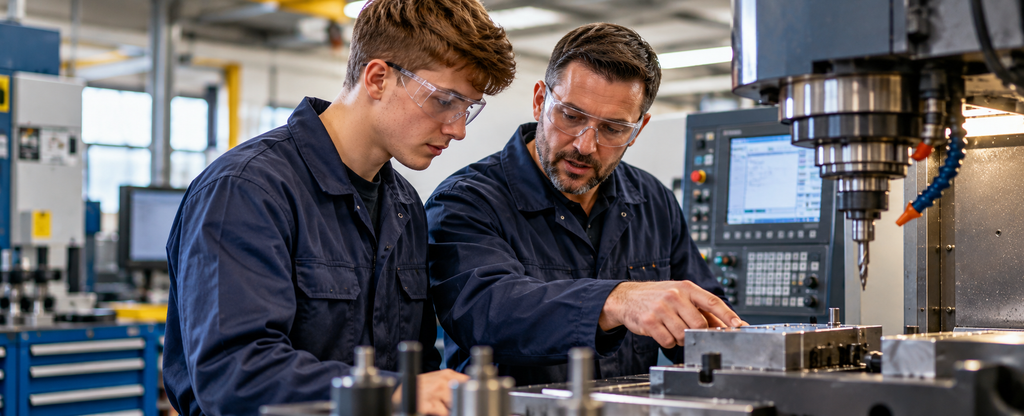
Engineering isn’t something that can be learned entirely from a screen. Apprentices need opportunities to work with tools, materials and machinery, understand how equipment behaves and develop confidence through experience.
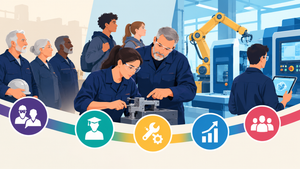
Through a combination of structured training and workplace learning, apprentices build technical knowledge while applying it to real engineering tasks.
Importantly, they also learn from experienced engineers. Understanding why a machine isn’t performing correctly, recognising potential quality issues or knowing when to stop work for safety reasons often comes from practical experience and guidance.
These skills remain valuable even as automation becomes more advanced.
For employers, apprenticeships also provide an opportunity to prepare their workforce for changing technology rather than simply reacting when new skills are needed.
By investing in apprentices, businesses can:
- Develop practical skills: Build competence in machining, welding, fitting and maintenance.
- Support new technology: Train employees who can adapt to changing equipment and processes.
- Retain valuable knowledge: Allow experienced engineers to pass on their skills.
- Build confidence and judgement: Give apprentices experience of solving real workplace problems.
- Plan for the future: Develop skilled employees who can grow alongside the business.
The question for employers isn’t whether apprenticeships will remain relevant as AI develops. It’s how apprenticeship training can help businesses prepare people to work effectively with these technologies.
A business may invest in the latest machinery or AI systems, but without employees who understand the equipment and can respond when something goes wrong, the benefits may be limited.
How Is Elevated Knowledge Preparing the Next Generation of Engineers?
At Elevated Knowledge, we believe the future of engineering depends on developing practical skills alongside an understanding of new technology.
AI may change how manufacturing businesses operate, but the need for skilled engineers, machinists, welders and fitters remains. Our engineering apprenticeship programmes focus on helping learners develop the technical knowledge, practical ability and workplace experience needed in modern engineering environments.
We support employers in developing future talent through structured apprenticeship training and recruitment assistance, helping businesses build the skills they need as their operations evolve.
Our apprenticeship pathways include, but aren’t limited to:
- Level 3 Machining Technician – developing skills in conventional and CNC machining, precision manufacturing and machine operation.
- Level 3 Plate Welder – building practical welding skills and an understanding of quality and safe working practices.
- Level 3 Metal Fabricator – learning to cut, shape and assemble metal components and structures.
- Level 3 Engineering Fitter – developing skills in assembling and fitting engineering components and equipment.
- Level 3 Engineering Maintenance Technician – building practical maintenance and fault-finding skills to support reliable production.
- Level 4 Lead Engineering Maintenance Technician – developing the technical expertise, strategic planning, and leadership skills needed to lead modern engineering teams.
- Level 4 Engineering Manufacturing Technician – improving production processes by implementing new technologies, and driving continuous improvement.
We also offer a Level 4 AI and Automation Practitioner Apprenticeship, supporting the development of digital skills for businesses looking to introduce and improve AI and automated processes.
By offering pathways across traditional engineering disciplines and emerging technologies, Elevated Knowledge helps employers develop a workforce equipped for today’s challenges and future opportunities.
AI is changing engineering, but skilled people remain at the heart of the industry.
Explore our engineering apprenticeship programmes or contact the Elevated Knowledge team to find out how we can support your training and recruitment needs.