The UK engineering and manufacturing sectors have faced skills shortages for years. Businesses need more engineers and technicians yet too many young people struggle to find a route into employment.
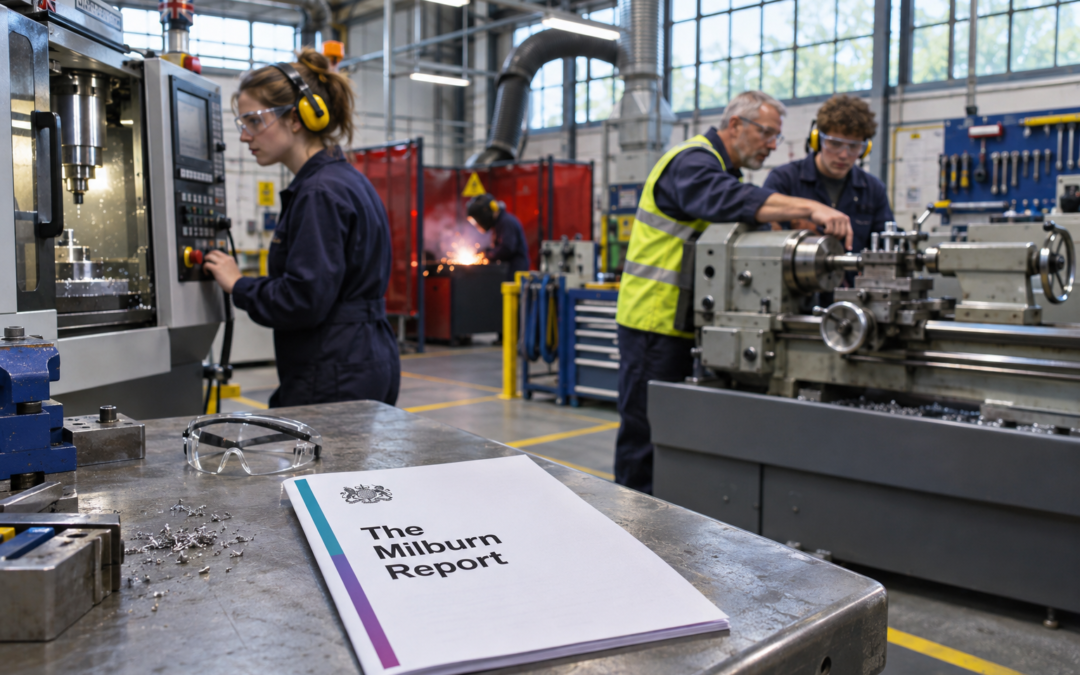
The newly published Milburn Report, From a Welfare State to a Working State examines how Britain can reconnect young people with employment, education and training.
Led by former minister Alan Milburn, the review recommends significant changes to apprenticeships and technical education.
For engineering and manufacturing, the question is whether these proposals can help develop the skilled workforce the sector needs.
What Does the Milburn Report Recommend?
The report sets out a ten-year programme to improve employment and training opportunities, with apprenticeships a central priority.
It recommends increasing annual apprenticeship starts among under-25s from approximately 172,000 in 2024/25 to 270,000 by 2036/37. The report also highlights raising completion rates from around 65% to 80%.
Other recommendations include:
- Increasing apprenticeship hiring incentives to £2,500 for eligible young recruits.
- Fully funding apprenticeship training for under-25s through the Growth and Skills Levy.
- Introducing 25,000 pre-apprenticeship places to prepare young people for employment and training.
- Reducing government apprenticeship funding for those aged 25 and over by 25%.
These are recommendations, not confirmed government policy changes. However, they indicate a potential shift towards making apprenticeships more accessible and financially attractive to employers.
Why Does the Report Matter to Engineering and Manufacturing?
Engineering and manufacturing businesses cannot develop skilled workers overnight.
People need to experience working with materials and many types of equipment. Maintenance technicians must understand machinery and fault diagnosis. Welders and fabricators need practical training to produce work that meets required standards.
These skills take time to develop, making a reliable pipeline of new talent essential.
As highlighted in our article on the skills gap in UK engineering and manufacturing, the sector is already dealing with experienced workers approaching retirement alongside changing technical requirements.
Although the Milburn Report addresses the wider economy rather than engineering specifically, expanding apprenticeships could help more young people enter technical careers and develop the practical skills manufacturers need.
The opportunity is not simply recruiting more apprentices. It is ensuring they receive the training and experience required to become competent engineers and technicians.
Could Apprenticeship Funding Changes Encourage More Employers to Recruit?
Recruiting and training apprentices requires investment, particularly for smaller manufacturers with limited resources.
The proposed £2,500 hiring incentive and fully funded training for under-25s could make apprenticeships more affordable and encourage businesses to recruit.
From our experience financial support alone will not solve the skills shortage.
Apprentices still need experienced colleagues, suitable equipment and structured training to develop their abilities.
Will Pre-Apprenticeships Create More Routes into Engineering?
The report proposes introducing 25,000 pre-apprenticeship places for young people who may not yet be ready to enter a full apprenticeship.
These programmes could help learners develop basic technical knowledge and confidence before progressing into employment.
For engineering, this could make a difference.
Not every young person leaving school has experience using tools, interpreting technical drawings or working in an industrial environment. Some have the aptitude for engineering but lack the opportunity to demonstrate it.
Pre-apprenticeship training could help bridge that gap, creating another route into the sector alongside existing Engineering and Manufacturing Foundation Apprenticeships.
What Does Elevated Knowledge Think About the Milburn Report?
Kieron McCormick, CEO of Elevated Knowledge welcomes the report’s emphasis on improving apprenticeship opportunities:
“We welcome the Milburn Report’s focus on getting more young people into apprenticeships. Engineering and manufacturing have had skills shortages for years, and better incentives for employers, fully funded training for under-25s and pre-apprenticeship routes could make a real difference.”
However, he also believes developing the existing workforce mustn’t be left behind.
“We’d urge the government not to forget experienced workers over 25, though, because upskilling the existing workforce matters just as much.”
Both the engineering and manufacturing sectors need young people but they also need experienced employees developing new capabilities in automation, advanced manufacturing and changing production processes.
Reducing government apprenticeship funding for those aged 25 and over could make it harder for businesses to develop their existing workforce.
Recruitment and upskilling should not be competing priorities. Both are essential to maintaining the technical expertise UK manufacturing depends on.
How Can Elevated Knowledge Support Engineering Employers?
At Elevated Knowledge, developing practical engineering skills is central to the apprenticeship programmes we deliver.
Our engineering and manufacturing apprenticeships support businesses recruiting new talent and developing employees across machining, maintenance, welding, fabrication and engineering fitting.
The Milburn Report presents an opportunity to strengthen the skills pipeline, but increasing apprenticeship numbers is only part of the answer.
The sector needs high-quality training, experienced mentors and continued investment in workers at every stage of their careers.
For businesses planning their future workforce requirements, now is the time to consider how apprenticeships and technical training can support those needs.
Explore our engineering apprenticeship programmes or contact Elevated Knowledge to discuss developing the skills your business needs.