
If your young adult enjoys engineering, machinery or learning by doing, an apprenticeship may already be on your radar. The trick part is understanding what the route involves, how much support they will receive and whether choosing it now could narrow their options later.
Those are sensible questions. An apprenticeship is not the same as a full-time college course, a training-provider programme or a short technical course. Each route offers a different mix of employment, structured study, occupational training and time to explore.
GWI Core data suggests that 53% of UK parents of 17-18-year-olds consider learning new skills important. Among UK internet users aged 16-24 who are interested in apprenticeships, 63% say learning new skills is important and 43% describe themselves as career-focused.
That does not mean an apprenticeship is automatically the right choice. It does suggest that parents and learners may want many of the same things, even if they describe them differently: useful skills, credible training, suitable support and a clearer sense of what comes next. [1] [2] [3]
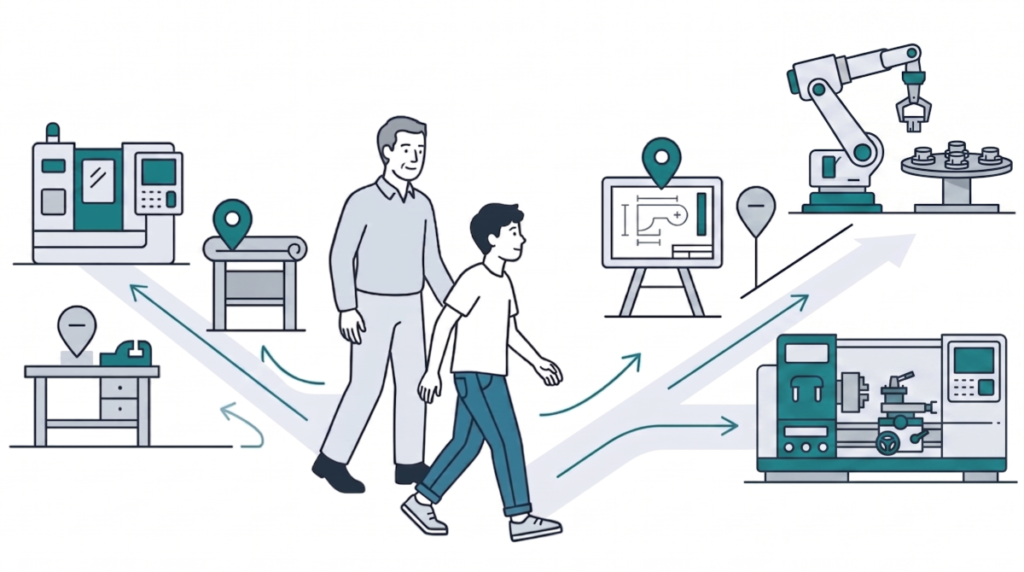
Table of Contents

Engineering apprenticeships at a glance
- The learner is employed and paid.
- Training takes place alongside the job.
- The employer provides workplace experience, training and supervision.
- A training provider manages structured off-the-job training.
- The apprentice, employer and provider agree a training plan.
- Entry requirements, qualifications and progression vary between programmes.
- Families should check the employer, training quality and support before applying. [4] [5]
Parent takeaway
An apprenticeship combines a job with education and training. It’s not a way to avoid education, and it’s not automatically a better choice than college.

What is an engineering apprenticeship?
An engineering apprenticeship is a paid job with a structured training programme. The apprentice develops the knowledge, practical skills and workplace behaviours needed for a specific occupation.
The employer provides the job, everyday experience and supervision. The training provider organises the off-the-job learning, which may take place at a college, training centre, workplace or online.
Before the programme starts, the apprentice, employer and provider should agree a training plan. It should explain what the apprentice will learn, how training will be delivered and how their progress will be reviewed. [5]
The apprentice must receive paid time during normal working hours for the training required by the programme. Their job must also give them a reasonable opportunity to develop the competence required by the apprenticeship. [4]
308,770 apprenticeship starts, up 8.7%
There were 308,770 apprenticeship starts in England between August 2025 and April 2026, an increase of 8.7% compared with the same period a year earlier.
Source: Department for Education, Apprenticeships, academic year 2025/26, published 16 July 2026. Figures for England are provisional. [6]
Is an engineering apprenticeship a real job?
Yes. An apprentice is an employee. They should receive a contract, wages and the employment rights that apply to their circumstances.
That also brings ordinary workplace expectations. The learner must be ready for regular hours, reliable attendance, appropriate conduct and real responsibility. An apprenticeship is not a temporary work-experience placement.
Apprenticeships are open to several age groups. These figures also explain why families should not assume that a suitable vacancy will be easy to find immediately after GCSEs.
An apprenticeship combines employment with education. One does not replace the other.
20.6% of starts involved under-19s
Under-19s accounted for 63,530 starts between August 2025 and April 2026. This was 5.4% lower than during the equivalent period in 2024/25.
Source: Department for Education, Apprenticeships, academic year 2025 / 26, published 16 July 2026. England; provisional figures. [6]
Engineering apprenticeship or college: how the routes compare
The label matters less than the detail. Families need to look at how each route works, how closely it matches the intended occupation and whether the learner is ready for its demands.
| Route | How it works | Who it may suit | What to check | Possible next steps |
|---|---|---|---|---|
| Engineering apprenticeship | Paid employment combined with structured training | Learners ready to work and study at the same time | Employer, standard, duties, training, support and assessment | Continued employment, specialist training, a higher apprenticeship or further study |
| Full-time college course | Classroom, workshop and practical learning, sometimes with work experience | Learners who want time to build technical knowledge before entering employment | Course content, facilities, work experience and progression | Employment, an apprenticeship, higher technical study or further education |
| Provider-led programme | Specialist training delivered by a provider, sometimes with an employer placement | Learners preparing for an occupation or apprenticeship | Employment status, qualification, placement and progression arrangements | An apprenticeship, employment or another training programme |
| Short practical course | A focused introduction to an occupation or technical skill | Learners exploring a trade or addressing a specific skills gap | Recognition, depth, cost and whether it leads to further training | Further training, occupational development or an apprenticeship application |
| Direct employment with training | Employment with workplace instruction that may not be a formal apprenticeship | Learners with relevant experience or an employer willing to train them | Whether the training is structured, assessed and transferable | Occupational experience, employer development or a later qualification |
| Higher technical or higher education route | Study at Level 4 or above, sometimes after college or an apprenticeship | Learners whose intended occupation requires or benefits from advanced study | Entry requirements, course recognition, content and career relevance | Technical, professional, management or specialist engineering roles |
University is not usually a direct alternative to an apprenticeship immediately after GCSEs. It’s more often a later option after A levels, a T Level, a Level 3 college qualification or, in some cases, an apprenticeship.
None of these progression routes is automatic. Future options will depend on the apprenticeship completed, any qualifications included, the course being considered and its entry requirements at the time.
Practical and academic learning are not opposing routes. Most engineering pathways require some of both.
An engineering apprenticeship may suit someone who:
- Wants to combine employment with structured training;
- Is ready for regular hours and workplace responsibilities;
- Is interested in machinery, systems, manufacturing or technical problem-solving;
- Can follow instructions and safety procedures;
- Is willing to ask questions, accept feedback and keep records;
- Wants to build competence in a defined occupation.
It may be less suitable right now if they:
- Do not yet know which area of engineering interests them;
- Need more time to develop English, maths or practical foundations;
- Are not ready for the attendance and conduct an employer will expect;
- Would benefit from exploring several subjects before specialising;
- Have found a college course that matches their intended occupation more closely.
This is not a judgement on ability. College, introductory training and further careers exploration can all lead to an apprenticeship later.
Benefits of an engineering apprenticeship: what families should check
The route may offer clear benefits, but only if the actual job and training programme are good enough. Families should test the detail rather than relying on the word “apprenticeship”.
| What the route may offer | What families should check |
|---|---|
| Paid employment while training | The wage, hours, travel requirements and likely costs |
| Occupational experience | Whether the duties provide meaningful development rather than repetitive basic work |
| Structured training | Who delivers it, where it happens and how it fits into the working week |
| A defined occupational standard | Which standard applies and what competence the apprentice must demonstrate |
| Regular progress reviews | Who attends, how often they take place and how concerns are handled |
| Workplace supervision | Who will supervise the apprentice and whether that person has enough time and experience |
| Possible progression | Whether the stated next step genuinely exists for the occupation and programme |
Skills England’s 2026 assessment lists engineers, technicians, skilled metal workers, electrical workers, programmers and process operatives among the priority occupations linked to advanced manufacturing. [7]
This is a broad UK workforce projection. It’s not a guarantee of apprenticeship vacancies and does not predict what will happen to an individual learner.
Around 148,000 additional and replacement workers
Skills England projects around 47,000 additional workers in advanced-manufacturing priority occupations by 2035, alongside approximately 101,000 replacement workers over 2026-2035. Together, that represents projected demand of around 148,000 workers.
Source: Skills England, June 2026. This is a projection rather than a vacancy forecast or job guarantee. [7]
The assessment estimates that 84% of projected additional employment across the advanced-manufacturing priority occupations it identified will require qualifications at Level 4 or above. This does not mean every entry-level engineering role requires a Level 4 qualification. It identifies above-average requirements for numeracy, digital literacy, problem-solving and decision-making.
For many learners, an entry-level apprenticeship will be the start of a longer development route, not the last qualification they will ever need.
Myth and reality
Myth: Apprenticeships are only for learners who do not perform well academically.
Reality: Engineering apprenticeships may involve maths, technical information, digital systems, written records, problem-solving and formal assessment. Entry requirements vary between vacancies.
Myth: Practical training means there is no study away from the job.
Reality: Apprentices complete structured off-the-job training during their working hours as part of the apprenticeship programme. [5]
Myth: Choosing an apprenticeship permanently rules out higher education.
Reality: Some apprentices later apply for higher apprenticeships, higher technical qualifications or university. Whether they can do so depends on their prior learning, the course and its entry requirements.
Myth: Every apprenticeship with the same title provides the same experience.
Reality: Apprenticeships follow occupational requirements, but the employer, duties, workplace, training arrangements and learner support can still vary.
Is engineering work safe for a young apprentice?
Engineering work can involve machinery, electricity, heat, noise, heavy materials, work at height and other controlled risks. A young person should never be expected to accept unsafe conditions as part of learning the job.
The employer has primary responsibility for the apprentice’s health and safety at work. When employing a young person, the employer should consider their experience, maturity, understanding and any additional risks. They should provide clear instruction, training and supervision.
The training provider should also take reasonable steps to satisfy itself that the employer is managing significant risks properly. [8]
Safety questions for parents to ask:
- Who completes the workplace risk assessment?
- What induction will the apprentice receive?
- Which tasks require supervision?
- Will protective clothing or equipment be supplied?
- Are there age restrictions on any machinery or duties?
- How can the apprentice report a concern?
- Who should parents or carers contact if the learner is under 18?
A responsible employer should be able to answer each question clearly. A general promise that the workplace is safe is not enough.
Types of engineering apprenticeships parents should understand
Engineering covers a wide range of jobs. Fitting, lift engineering, machining, fabrication and welding may overlap in some workplaces, but they use different equipment, take place in different environments and have different occupational requirements.

Engineering fitter
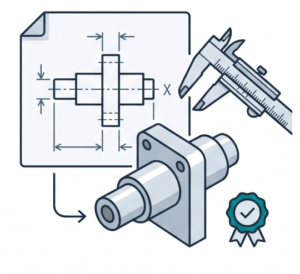
What they do: Engineering fitters produce, assemble, adjust or repair components and engineering systems. The work may include interpreting technical information, checking tolerances and using machinery or hand tools.
Worth considering: Accuracy and safe working matter. The learner also needs to understand how individual components fit into a larger system.
Lift engineer
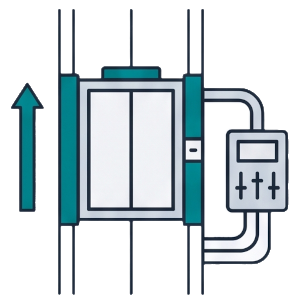
What they do: Lift engineers install, service and repair lifts, escalators and moving walkways. Their tasks can include reading wiring diagrams, calibrating controls, completing safety checks and responding to breakdowns.
Worth considering: The job may involve frequent travel, customer sites, cramped working environments and a combination of mechanical and electrical systems.

Machining technician
What they do: Machining technicians produce precision components using conventional or computer numerically controlled machinery. CNC work can include programming equipment, setting cutting speeds, monitoring operations and inspecting finished parts.
Worth considering: This route mixes hands-on machine operation with digital controls, measurement, technical drawings and quality standards.

Metal fabricator
What they do: Metal fabricators cut, shape, prepare and assemble metal components. They may work with sheet, plate, structural sections and different materials, using manual, powered, thermal or automated processes.
Worth considering: Fabrication ranges from relatively small components to large structures, so the working environment and physical demands can vary considerably.

Welder
What they do: Welders join and shape metals using controlled welding processes. The work may involve plate, pipe, structural work, manufacturing or repair.
Worth considering: Welding and fabrication are closely connected, but they are not the same job. A fabricator may prepare and assemble a complete structure, while a welder specialises in producing suitable welded joints.
Advanced manufacturing remains male-dominated. Skills England estimates that 76% of the workforce is male, compared with 52% across all UK industries. The report says that improving women’s access to the sector would widen the available talent pool. [7]
Engineering ability is not determined by gender. Families should judge the actual employer by its culture, facilities, support and development opportunities.
What if they cannot find an engineering apprenticeship straight away?
An apprenticeship only exists when an employer offers a suitable vacancy. Completing a course or registering with a training provider does not automatically create an employed apprenticeship position.
Between August 2025 and June 2026, Find an Apprenticeship carried 69,820 advertised vacancies, 23% fewer than during the equivalent period a year earlier. [6]
The government statistics also make clear that the service covers only part of the vacancy market. Some employers recruit through their own websites, training providers, recruitment platforms, careers events or direct applications.
A learner who cannot find a vacancy immediately could:
- Apply for a relevant full-time college course
- Take an introductory or foundation programme
- Improve their English, maths or technical foundations
- Attend employer and provider open days
- Search for related job titles rather than relying on one title
- Set vacancy alerts and check employer websites
- Gain relevant experience without assuming unpaid work will lead to an apprenticeship
- Apply again when suitable vacancies appear
The question is not “How do we avoid college?” or “How do we secure any apprenticeship?” A better question is: “What can the learner do next that moves them towards the right occupation?”

How parents can help without taking over
Parents can help by slowing the decision down and checking the claims made about the programme. It’s also worth encouraging the learner to compare several occupations before committing to one.
A practical decision journey might look like this (the exact route will differ between occupations and learners):
- Explore engineering occupations
- Compare apprenticeship and college routes
- Check entry requirements
- Research employers and providers
- Apply for suitable opportunities
- Review the employment and training details
- Complete training and assessment
- Consider employment, specialist training or further study
Parents can support the decision by:
- Asking what type of work genuinely interests the learner
- Helping them research several job titles
- Attending open days or provider discussions together
- Comparing travel, hours and workplace expectations
- Checking how competence will be taught and assessed
- Discussing safety, safeguarding and learner support
- Looking beyond salary headlines
- Allowing the learner to lead conversations and applications where possible
Parents can help most by asking detailed questions about the programme, not by choosing the route for the learner.
Government careers guidance encourages parents and carers to help young people explore career ideas, compare training options and make their own informed decisions. [14]
Female learners accounted for 19.5% of STEM apprenticeship starts
Women accounted for 19.5% of STEM apprenticeship starts in England between August 2025 and April 2026, up from 17.2% during the equivalent period a year earlier.
Source: Explore Education Statistics, July 2026.

Questions to ask an employer or training provider
- Is this an employed apprenticeship or a programme designed to prepare learners for one?
- Who will employ and pay the apprentice?
- Which apprenticeship standard will they follow?
- What will an ordinary working week look like?
- Which duties will the apprentice complete during the first six months?
- How and where will off-the-job training be delivered?
- Which practical, technical and digital skills will be taught?
- How will progress be reviewed?
- Who will supervise the apprentice at work?
- What pastoral, safeguarding and learning support is available?
- What reasonable adjustments can be provided where required?
- What qualifications or evidence of competence will be gained?
- How will the apprenticeship be assessed?
- What happens if the employer placement ends?
- What have previous apprentices progressed to?
- Are travel, tools, protective clothing or other costs involved?
- Does the role match the learner’s preferred working environment?
- Has the learner compared the opportunity with relevant college routes?
Check the detail
Be cautious when a programme uses phrases such as “guaranteed career“, “industry-recognised” or “progression available” without naming the employer, apprenticeship standard, training, assessment or specific next step.
Ask for evidence and programme details rather than relying on the label.
Employers are encouraged to provide a suitable induction, mentoring, regular guidance, performance reviews and wellbeing support. Employers and training providers should also identify learning or accessibility needs and agree reasonable adjustments where required. [15]

Frequently asked questions about engineering apprenticeships
Is an engineering apprenticeship a real job?
Yes. The apprentice is employed, paid and expected to carry out a genuine occupational role. The employer must also allow paid working time for the training required by the programme. [4]
Families should check who the legal employer is, what duties the learner will complete and how much time is set aside for structured training.
Do you get a qualification from an engineering apprenticeship?
The learner will complete an apprenticeship and be assessed against its occupational requirements, but the exact qualifications included vary.
Some apprenticeship standards include a mandatory qualification. Others focus on demonstrating occupational knowledge, skills and behaviours through training and assessment. Ask for the standard name, assessment arrangements and any included qualifications in writing.
Can you go to university after an apprenticeship?
Potentially, but progression should not be presented as automatic. A learner may later apply for university, a higher apprenticeship or a higher technical qualification if they meet the relevant entry requirements.
The route available will depend on the occupation, apprenticeship level, qualifications gained and course being considered. Families should check the requirements for a specific course rather than assuming every Level 3 apprenticeship leads to the same options.
Is an engineering apprenticeship better than college?
Not in every case. An apprenticeship may suit a learner who is ready for employment and has found a suitable occupation and employer. College may be a better fit for someone who needs more time to build knowledge, practical skills or confidence before specialising.
Compare the actual apprenticeship vacancy with the actual college course. Idealised versions of either route are not useful.
Does an apprenticeship limit future career options?
Any specialised choice can shape later options, whether it’s an apprenticeship, college course or academic subject.
The more useful question is whether the apprenticeship builds relevant competence and offers realistic progression towards the intended occupation. Check the standard, qualification level and entry requirements for the next step before assuming every route will remain open.
Is engineering safe for a 16-year-old?
Engineering workplaces must manage risks, provide suitable training and supervise young people properly. The employer has primary responsibility for the apprentice’s health and safety at work. [8]
Parents should still ask about induction, supervision, protective equipment, restricted machinery and how concerns are reported. “We take safety seriously” is less useful than a clear explanation of what the employer actually does.
Are engineering apprenticeships only for boys?
No. Gender does not determine whether someone has the interest or aptitude for engineering.
Women remain underrepresented in STEM apprenticeships and advanced manufacturing, although the proportion of female STEM apprenticeship starts increased in the latest provisional data. [6]
Families should look at the employer’s culture, facilities, support and treatment of apprentices rather than accepting stereotypes about who belongs in engineering.
Is CNC machining manual or digital?
It involves both. CNC machinists work with physical machinery and manufactured components, but they also use computer-controlled equipment, machine settings, programmes, technical drawings and measurement systems. [11]
The route may suit someone who enjoys practical work and is also comfortable with precision, numbers and digital controls.
What if they do not know which engineering trade suits them?
They should explore the options before specialising. Career guides, provider visits, open days, college workshops and conversations with employers can make the differences clearer.
A learner may understand the broad idea of “engineering” without yet knowing how fitting, maintenance, machining, fabrication, welding and electrical work differ. Researching several related job titles helps.
What support should a young apprentice receive?
The programme should have clear employer and provider responsibilities, a training plan and regular progress reviews. The learner should know who supervises them, who manages their training and where to raise a concern. [5]
Support may also include a thorough induction, mentoring, wellbeing support, learning support and reasonable adjustments where needed. [15]
What happens if the employer closes or the apprenticeship ends early?
The apprentice should contact the training provider promptly. Government guidance states that training may continue to be funded for at least 12 weeks after redundancy while the apprentice looks for another employer. Additional arrangements may apply when less than six months of training remains. [16]
Another employer is not guaranteed, so families should ask the provider what practical help it offers in this situation.
What should we check before accepting an offer?
Check the employer, job description, apprenticeship standard, wage, working hours, travel, training schedule, supervision, assessment, support and any claims about progression.
The learner should understand what an ordinary week will involve. They should also have enough information to tell the difference between a genuine apprenticeship, a preparatory training programme and an ordinary job with informal training.
Final takeaway
An engineering apprenticeship can be a good option for a learner who is interested in a defined occupation and ready to combine employment with structured study.
It will not suit everyone. College, provider-led training, direct employment and later higher education may also be credible routes, depending on the learner and the occupation.
Base the decision on the actual employer, duties, apprenticeship standard, training provider, support and progression route. General claims about apprenticeships, or assumptions about academic and practical learning, are not enough.
Sources used in this article
[1] https://app.globalwebindex.com/chart-builder/insights-v2/23e6ea76-1cee-4591-8fd8-bf636a0abd70
GWI Core – Importance of learning new skills among UK parents of 17-18-year-olds. Supports the finding that 53% of the defined parent audience says learning new skills is important.
Market: UK. Audience: parents of 17-18-year-olds. Dataset period: Q2 2025 to Q1 2026. Audience and measure: UK parents of 17-18 year olds; importance placed on learning new skills. The link may require a GWI subscription. GWI is audience research rather than official apprenticeship or labour-market evidence.
[2] https://app.globalwebindex.com/chart-builder/insights-v2/30e6c29e-a00f-4cc0-ae3e-9ea60dfa158a
GWI Core – Importance of learning new skills among UK 16-24s interested in apprenticeships. Supports the finding that 63% of this defined audience says learning new skills is important.
Market: UK. Audience: internet users aged 16-24 who indicated an interest in apprenticeships. Measure: importance placed on learning new skills. Fieldwork period: Q2 2025 to Q1 2026. Result: 63%. The linked insight may require a GWI subscription. Do not generalise this finding to all UK young people.
[3] https://app.globalwebindex.com/chart-builder/insights-v2/c599bd91-1f0e-46da-b9b7-e2ded2662d5b
GWI Core – Career focus among UK 16-24s interested in apprenticeships. Supports the finding that 43% of the defined learner audience describes itself as career-focused. Market: UK. Audience: internet users aged 16-24 who indicated an interest in apprenticeships. Measure: self-description as career-focused. Fieldwork period: Q2 2025 to Q1 2026. Result: 43%. The linked insight may require a GWI subscription. This is audience-research evidence rather than official employment data.
[4] https://www.gov.uk/employing-an-apprentice/pay-and-conditions-for-apprentices
GOV.UK – Employing an apprentice: pay and conditions for apprentices. Supports the explanation that an apprenticeship must involve a real paid job, relevant occupational development and paid time for required training.
Geography: England. Rules and wage entitlements are time-sensitive.
[5] https://www.apprenticeships.gov.uk/apprentices/roles-responsibilities / https://www.apprenticeships.gov.uk/apprentices/off-the-job-training
HM Government – Apprenticeship roles and responsibilities. Explains the respective responsibilities of the apprentice, employer and training provider, including the apprenticeship agreement, training plan, off-the-job learning and progress reviews.
Geography: England. Live guidance checked: 5 August 2026.
[6] https://explore-education-statistics.service.gov.uk/find-statistics/apprenticeships/2025-26
Department for Education and Department for Work and Pensions – Apprenticeships, academic year 2025/26. Supports apprenticeship starts, age participation, female STEM participation and Find an Apprenticeship vacancy figures used in the article.
Published and last updated: 16 July 2026. Reporting period: August 2025 to April 2026 for starts and August 2025 to June 2026 for vacancies. Geography: England. Figures are provisional. Find an Apprenticeship represents only a subset of the vacancy market.
[7] https://assets.publishing.service.gov.uk/media/6a18500a65bc5f798327f4ad/sna_advanced_manufacturing.pdf
Skills England – Sector Skills Needs Assessment: Advanced Manufacturing. Supports projected additional and replacement demand, expected qualification levels, priority occupations, core skills and workforce gender figures.
Published: 1 June 2026. Updated: 23 June 2026. Relevant pages: 3-4, 8-9 and 11-15. Geography: UK unless otherwise specified. Forecasts are indicative projections rather than guaranteed jobs or vacancies.
[8] https://www.hse.gov.uk/young-workers/employer/apprentices.htm
Health and Safety Executive – Young people at work: apprentices. Supports the explanation of employer and training-provider responsibilities for managing workplace risks affecting apprentices.
Geography: Great Britain, with specific apprenticeship arrangements explained for England and Wales. An occupational profile or general rule does not replace a workplace-specific risk assessment.
[9] https://skillsengland.education.gov.uk/occupations/OCC0432
Skills England – Engineering fitter occupational standard. Supports the description of engineering fitting, including producing and assembling complex components and systems to technical specifications.
Standard reference: OCC0432. Level: 3. Date updated: 15 October 2024. Geography: England. Individual employers may organise duties differently.
[10] https://nationalcareers.service.gov.uk/job-profiles/lift-engineer
National Careers Service – Lift engineer. Supports the role description, working conditions, entry routes, typical tasks and possible progression associated with lift engineering.
Geography: England for training opportunities; occupational information is broader. Entry requirements shown are examples and may vary by employer and vacancy.
[11] https://nationalcareers.service.gov.uk/job-profiles/cnc-machinist
National Careers Service – CNC machinist. Supports the machining description, use of computer-controlled machinery, technical drawings, inspection, programming and quality-control tasks.
Geography: England for training opportunities; occupational information is broader. The profile does not represent every machining workplace.
[12] https://skillsengland.education.gov.uk/apprenticeship-standards/st0607-v1-3
Skills England – Metal fabricator apprenticeship standard. Supports the description of cutting, preparing, shaping and assembling metal materials using different tools and processes.
Standard reference: ST0607. Level: 3. Geography: England. Duties and working environments vary between employers and sectors.
[13] https://nationalcareers.service.gov.uk/job-profiles/welder
National Careers Service – Welder. Supports the description of welding work, apprenticeship routes and distinctions between different welding occupations.
Geography: England for training opportunities; occupational information is broader. Entry requirements and programme durations vary.
[14] https://www.skillsforcareers.education.gov.uk/pages/parent-advice-and-resources
HM Government – Help shape their career. Provides parent, carer and teacher guidance on helping young people explore apprenticeships, higher and degree routes and impartial careers information.
Geography: England. Live guidance checked: 5 August 2026.
[15] https://www.apprenticeships.gov.uk/employers/supporting-your-apprentice
HM Government – Supporting your apprentice. Supports the discussion of induction, mentoring, performance reviews, wellbeing and additional support for apprentices.
Geography: England. Live guidance checked: 5 August 2026. The precise support available differs between employers and learners.
[16] https://www.gov.uk/guidance/redundancy-support-for-apprentices
GOV.UK – Redundancy support for apprentices. Explains the support available when an apprentice is made redundant, including continued training funding while another employer is sought.
Geography: England. Guidance checked: 5 August 2026. Continued funding does not guarantee that a replacement employer will be found.
Last reviewed: 5 August 2026
Need help understanding the available routes?
Explore Elevated Knowledge’s engineering apprenticeships and training options or speak with the team about entry requirements, programme delivery and progression.